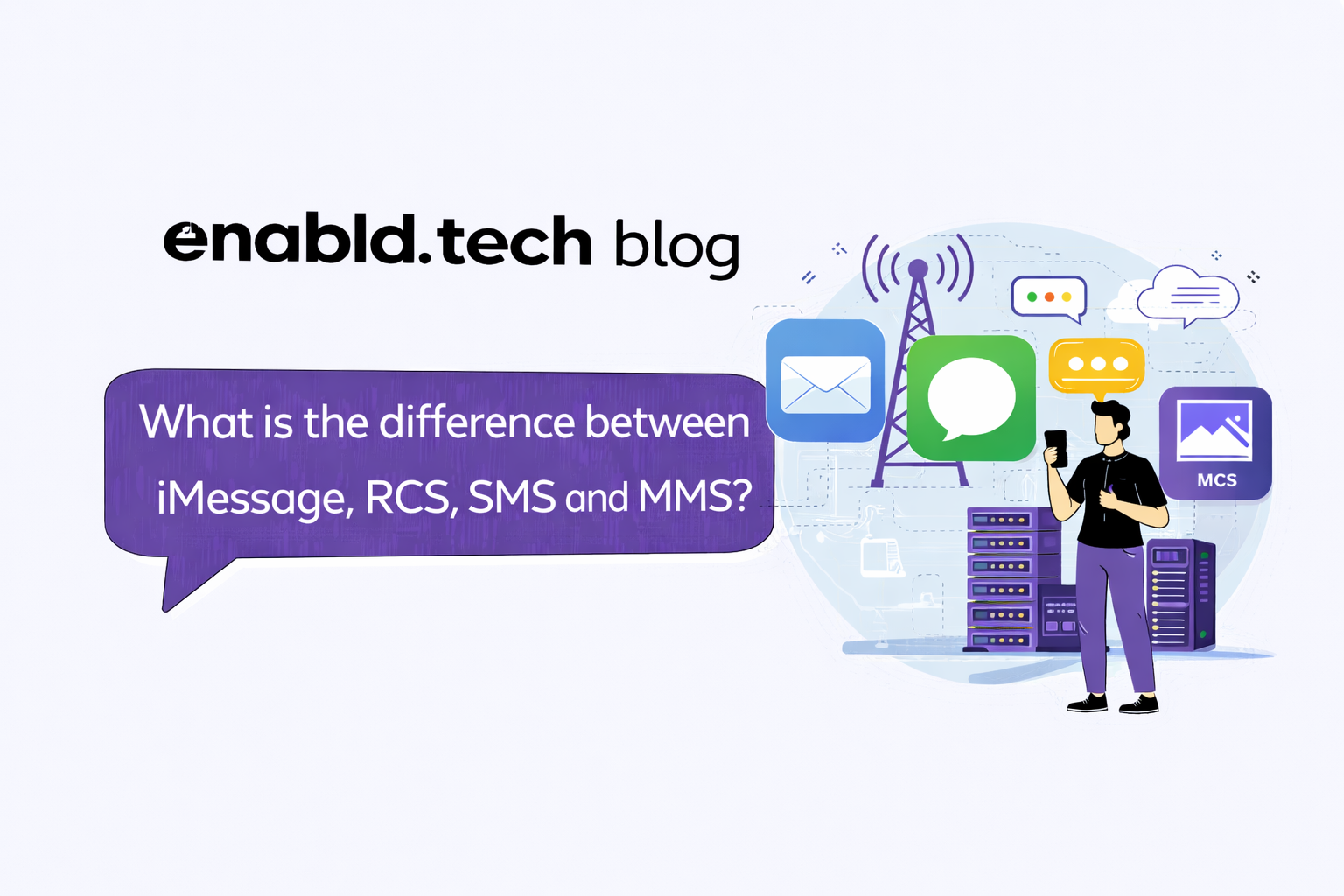
Imagine sending a simple “Hi” that arrives instantly worldwide, no matter the device or network, versus a rich video message that sparkles across screens with animations and effects, like iMessage’s flair.
From basic texts in the 1990s to today’s multimedia marvels, messaging technology has evolved dramatically, powering everything from personal chats to enterprise campaigns. Yet confusion persists among businesses: which protocol—iMessage, RCS, SMS, or MMS will best fit their telecom needs?
Do You Know?
Back in 1992, a young engineer named Neil Papworth, just 22 years old and working at Vodafone, tapped out the world’s very first text message on December 3rd, simply saying “Merry Christmas” to a colleague’s phone.
Fast-forward to today: iMessage, RCS, SMS, and MMS represent distinct messaging technologies, each with unique capabilities suited to different needs. Understanding their differences helps businesses leverage reliable channels like SMS gateways for enterprise messaging solutions. This blog dives into core definitions, technical foundations, feature comparisons, business applications, reliability, and more.
Table of Contents
- Knowing the Basics: SMS, MMS, iMessage & RCS Defined
- How SMS, MMS, iMessage & RCS Actually Work?
- Feature Face-Off: Where SMS, MMS, iMessage & RCS Shine (and Fall Short)
- Why SMS Outperforms MMS, iMessage, and RCS for Business
- Conclusion
Knowing the Basics: SMS, MMS, iMessage & RCS Defined
Let’s simplify these terms one by one. We’ll cover what they are, their core strengths, and how they fit (or don’t) into enterprise messaging.
SMS:
SMS, also known as Short Message Service, delivers plain-text messages limited to 160 characters each and travels reliably over cellular networks.
This setup guarantees compatibility on every mobile device worldwide, so no internet is needed, SMS simply works everywhere.
As a result, it’s perfect for reliable alerts via SMS gateways, and businesses love it for instant notifications and high-impact campaigns.
MMS:
MMS, or Multimedia Messaging Service, builds on SMS by adding support for images, videos, and audio clips.
However, it comes with strict file size limits, often capping at a few hundred KB, and delivery fully depends on carrier support.
This makes MMS handy for basic visual promotions, yet less reliable than plain SMS for enterprise messaging campaigns.
iMessage:
iMessage, Apple’s exclusive internet-powered protocol for iOS devices, brings fun reactions, dazzling effects, and crisp high-quality media sharing.
However, these perks work exclusively between Apple users, creating a closed ecosystem that skips over Android entirely.
While great for personal iPhone chats, it falls short for businesses needing broad reach across all devices.
RCS:
RCS, or Rich Communication Services, upgrades SMS and MMS with exciting IP-driven perks like typing indicators, read receipts, high-quality group chats, and even branded business messages.
It unites Android and iOS users seamlessly where carriers enable it, bridging the gap between basic texting and modern apps.
For businesses, this means richer engagement through enterprise messaging solutions, though adoption still depends on network support worldwide.
How SMS, MMS, iMessage & RCS Actually Work?
SMS:
SMS sticks to old-school SS7 protocols, the reliable telecom backbone powering wholesale SMS gateways and rock-solid SMS solutions for enterprises. SS7 service providers ensure messages route flawlessly through SMS routing platforms, no internet required.
Example: A bank sends instant OTPs during a nationwide outage—reaching every customer’s phone for secure logins, with 98% delivery in seconds.
MMS:
MMS builds on SMS infrastructure but switches to IP for media like photos and videos, leading to higher costs and slower delivery due to carrier dependencies.
Example: A restaurant chain shares a mouthwatering burger photo with a lunch special, driving foot traffic as customers receive crisp visuals on supported networks.
iMessage:
iMessage skips cellular networks entirely, running purely on data or Wi-Fi for slick Apple-to-Apple chats with effects and HD media.
Example: Friends collaborate on a group trip plan, sharing live location pins and animated stickers that make coordinating effortless and fun.
RCS:
RCS smartly blends SS7 SMS gateways with IP magic for next-level features like typing dots and read receipts.
Example: An e-commerce brand launches a flash sale with interactive carousels and “Buy Now” buttons, boosting click-through rates by 15-30% in cross-platform groups.
| Protocol | Delivery Method | Max Character Limit | Media Support | Internet Required |
| SMS | Cellular (SS7) | 160 | No | No |
| MMS | Cellular/IP | 160 (text) | Limited | Partial |
| iMessage | Data/Wi-Fi | No limit | High-quality | Yes |
| RCS | Cellular/IP | No limit | Rich | Preferred. |
Feature Face-Off: Where SMS, MMS, iMessage & RCS Shine (and Fall Short)
SMS keeps it simple and unbeatable for reach, powering SMS marketing platforms and multi-channel customer engagement software with rock-solid alerts, 2FA codes, and campaigns that hit every phone. Although it lacks read receipts or typing indicators, it guarantees delivery via telecom-grade SMS delivery gateways.
MMS adds basic multimedia like pics and clips, yet quality often dips with compression, and zero interactive elements which make it feel outdated for today’s enterprise messaging platforms. Still, it gets the job done for quick visual nudges.
iMessage dazzles Apple fans with end-to-end encryption, playful message effects, and smooth group chats but only among iPhones. Thereby, it limits its business utility, especially for those eyeing for wider reach.
RCS steps up with branded messages, swipeable carousels, and sharp HD media, acting like a smart SMS API integration for enterprises and playing nice with SMS-enabled virtual numbers. Unlike iMessage’s closed ecosystem, RCS spans Android and iOS with carrier backing.
| Feature | SMS | MMS | iMessage | RCS |
| Read Receipts | No | No | Yes | Yes |
| Typing Indicators | No | No | Yes | Yes |
| End-to-End Encryption | No | No | Yes | Partial |
| Group Chat Quality | Basic | Basic | HD | HD |
| Business Branding | Basic | Basic | No | Yes |
Why SMS Outperforms MMS, iMessage, and RCS for Business
In today’s fast-evolving telecom landscape, businesses demand messaging solutions that deliver universal reach, reliability, and cost efficiency. SMS stands out as the gold standard, powering everything from global campaigns to fraud-protected notifications via platforms like Enabld’s wholesale gateways, outshining MMS’s media costs, iMessage’s Apple-only limits, and RCS’s data dependencies. Let’s explore key areas where SMS excels.
Business Applications
- For most businesses, SMS is the reliable workhorse that plugs right into campaign managers and enterprise messaging tools, hitting every mobile phone out there without exceptions. Moreover, wholesale SMS gateways make it easy to run global campaigns, 2-way SMS numbers, and cloud numbers for two-way interactions.
- MMS? It’s fine for quick promos with pics, but those extra media fees add up fast, and it’s often getting swapped out for RCS in setups that block spam and fraud for carriers.
- iMessage? Great for Apple fans, but it locks you out of Android users, which kills it for B2B stuff like HLR lookups or instant SMS firewalls that operators need.
- RCS brings the fun with buttons and rich interactions through SIP trunks and omnichannel platforms, evolving SMS policies along the way. However, it still leans on solid gateways to scale up.
Reliability and Reach
- SMS just works—zipping over voice and SMS networks with crazy-high 99% open rates, making it a no-brainer for urgent alerts through virtual numbers. The best part? It doesn’t need internet, so no drop-offs or weird fallbacks, and it covers pretty much the whole world.
- MMS? Spotty delivery depends on the carrier, and it flops on slow networks, nothing like the tough SMS routing that keeps things steady.
- iMessage needs data to shine, or it falls back to plain SMS, showing its weak spots.
- RCS is promising but picky. It needs carrier buy-in and data, though micro services can scale it to thousands of messages per second like a pro gateway.
Security Considerations
- SMS doesn’t come with built-in encryption. That’s why smart businesses add firewalls and HLR lookups to validate numbers and block fraud. These steps are crucial as they keep spam out of telecom networks and enterprises safe.
- MMS carries the same risks as SMS, with just basic carrier filters that often fall short.
- iMessage locks it down with end-to-end encryption (Apple-style).
- RCS chips in with partial protection for one-on-one chats through apps like Google Messages.
For real-time checks, businesses prefer SS7 gateways that deliver secure, instant validation without the headaches.
Cost and Scalability
- SMS keeps costs low per message. It scales effortlessly through wholesale gateways for massive enterprise volumes.
- In case of MMS, It can double or triple fees just for adding media.
- iMessage feels free over data. But it’s a no-go for bulk business sends.
- RCS targets SMS-level pricing with extra features like cloud numbers and virtual provisioning.
Conclusion:
SMS and MMS form the reliable backbone, evolving hand-in-hand with RCS adoption for richer experiences. iMessage stays Apple-centric, but RCS standardizes interactive features across devices. The key? Hybrid strategies using SMS APIs, SIP trunk portals, and tools like firewalls and HLR lookups.
For universal reach, start with SMS via wholesale gateways, while adding RCS for engagement on supported networks. Platforms like Enabld make it seamless with 2-way numbers, campaign managers, and enterprise-grade scalability, future-proofing your setup with upcoming features. Ready to maximize ROI? Check out Enabld’s SMS solutions and get started today.