An MVNO does not own a network, which is exactly the point and exactly the problem. Leasing network capacity from a host MNO lets a mobile virtual network operator launch fast and skip billions in infrastructure spend, but it also caps how much margin is left once that wholesale cost is paid. Understanding how MVNOs actually make money, and where CPaaS fits into fixing the margin problem, matters more in 2026 than it did five years ago, as competition in this space has gotten considerably tighter.
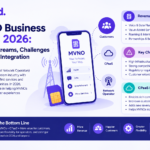
Quick Answer: The MVNO business model works by leasing network capacity from a host mobile network operator at wholesale rates, then reselling connectivity to subscribers under its own brand. Revenue comes primarily from subscription plans, with margin determined by the gap between wholesale network costs and retail pricing. CPaaS integration helps MVNOs improve margins by adding messaging, voice, and engagement revenue on top of connectivity, rather than competing on network price alone.
How Does an MVNO Work?
An MVNO works by signing a wholesale agreement with a host MNO to access network capacity, voice, data, and SMS, without owning the radio infrastructure itself. The MVNO then markets, sells, and bills subscribers under its own brand, handling customer acquisition, support, and often a differentiated plan structure the host network does not offer directly. The host MNO gets incremental network utilization and wholesale revenue, while the MVNO gets a much faster and cheaper path to market than building a network from scratch.
The MVNO Revenue Model
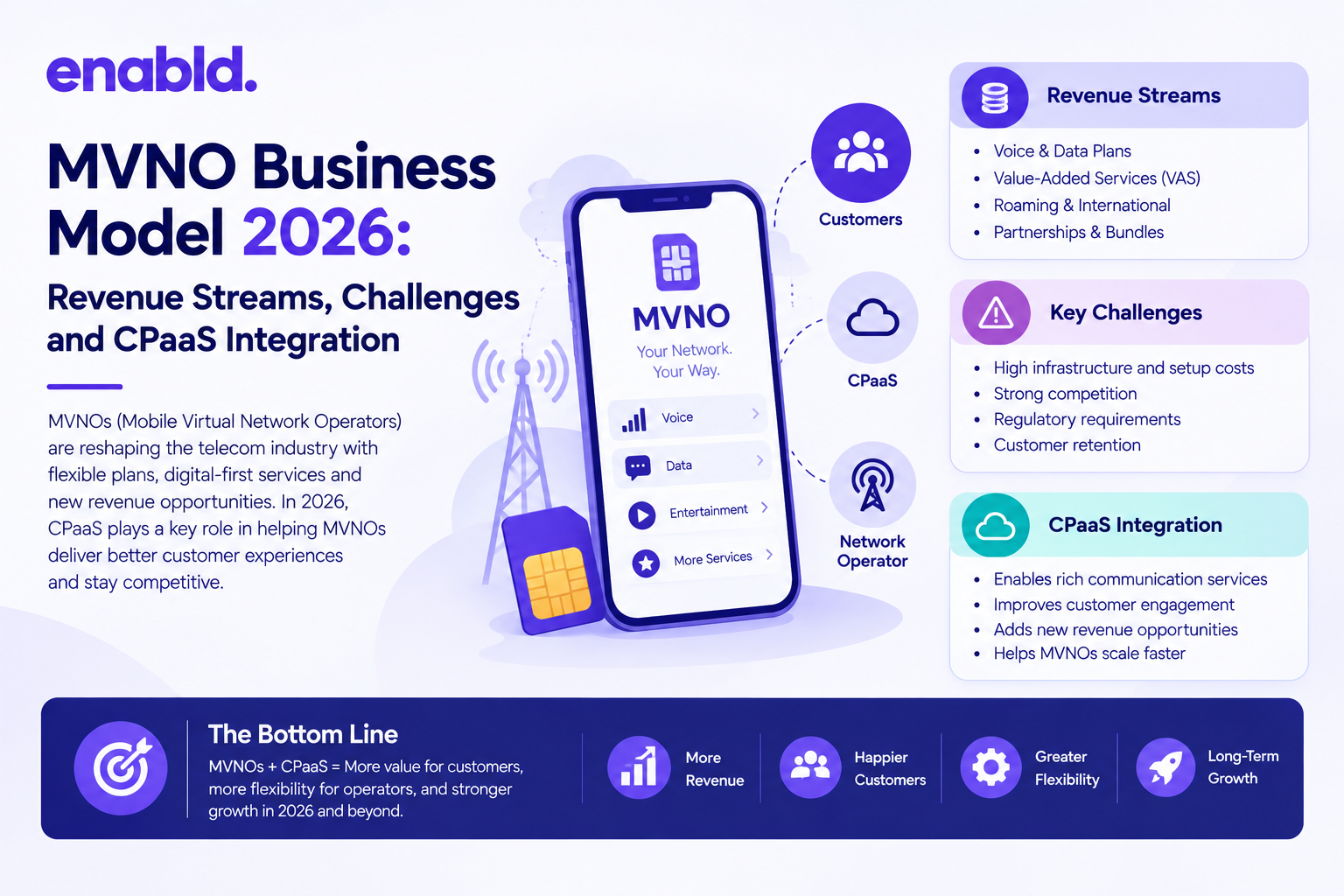
Most MVNO revenue still comes from a straightforward source, monthly subscription fees for voice, data, and SMS bundles sold directly to consumers or businesses. Beyond that baseline, a few additional streams have become common. Device financing and bundled hardware sales add margin on top of the core plan. Value added services, including international roaming add ons, data boosts, and loyalty programs, create upsell revenue from an existing subscriber base. Niche market targeting, serving a specific demographic or community an MNO does not prioritize, often allows an MVNO to charge a premium despite using the same underlying network.
MVNO Margin: Why It’s Tighter Than It Looks
MVNO margin is structurally harder to protect than MNO margin, because the single largest cost, wholesale network access, is fixed by a contract the MVNO does not control. Every dollar of retail price increase risks losing price sensitive subscribers to a host network or competing MVNO, while the wholesale cost floor rarely moves without renegotiation. This squeeze is why so many MVNOs that compete purely on cheap data plans struggle to sustain profitability past their first few years, even when subscriber growth looks healthy on paper.
MVNO vs MNO Profitability
The MVNO vs MNO profitability comparison comes down to capital structure. An MNO carries enormous fixed infrastructure costs but captures the full margin on every byte and minute it sells, including the wholesale markup it charges MVNOs. An MVNO avoids that infrastructure burden entirely, which lowers the barrier to entry, but it also means an MVNO is paying someone else’s margin before it earns its own. In practice, this means MVNOs generally operate at lower overall margin per subscriber than MNOs, and the ones that perform best are usually the ones that have found a revenue source beyond pure connectivity resale.
MVNO Business Model Challenges in 2026
A few pressures have intensified for MVNOs specifically in the past couple of years. Price competition from other MVNOs and MNO sub brands has compressed what a pure connectivity play can realistically charge. Churn remains a persistent problem, since subscribers switching to a cheaper MVNO have little loyalty keeping them from switching again. Regulatory and compliance requirements, particularly around SIM registration and fraud prevention, have grown more demanding in many markets, adding operational cost that a lean MVNO was not necessarily built to absorb.
MVNO CPaaS Integration: Where the Margin Problem Gets Solved
MVNO CPaaS integration gives operators a way to build revenue that does not depend entirely on connectivity pricing. Rather than competing purely on who can offer the cheapest data plan, an MVNO can layer CPaaS enablement on top of its existing subscriber base, offering enterprise messaging, two factor authentication, and omnichannel communication services to business customers, a revenue stream with meaningfully better margin characteristics than reselling wholesale connectivity.
How CPaaS Changes the MVNO Revenue Mix
A CPaaS layer lets an MVNO monetize messaging infrastructure the same way larger operators do, without building SS7, SMPP, and routing infrastructure internally. An MVNO already has billing relationships and subscriber trust in place, which is a real advantage when launching a branded messaging or A2P business on top of a CPaaS platform built for exactly this kind of white label deployment. This mirrors the same buy versus build calculation covered in our guide on white label CPaaS vs building from scratch, except here the operator is an MVNO rather than a full network owner, which makes licensing an even more straightforward decision given the MVNO’s existing cost structure.
What an MVNO Gains From Adding Messaging Revenue
Adding CPaaS based messaging revenue gives an MVNO a second income stream with margin that is not tied to the host network’s wholesale pricing at all. A2P messaging, delivered through a carrier-grade SMS gateway platform, generates revenue per message rather than per subscriber, which diversifies the business away from a model where churn and price competition are the only levers available. It also opens a path into serving enterprise customers directly, a market segment many MVNOs otherwise have no natural way to reach.
Building a More Resilient MVNO Business Model
The MVNOs most likely to remain profitable through 2026 and beyond are the ones that stop treating connectivity resale as the entire business. Layering messaging, fraud protection, and omnichannel communication services on top of the core subscription model turns a thin margin connectivity business into a broader communications business, one with more revenue levers and less direct exposure to wholesale pricing pressure from the host network.
Final Thoughts
The MVNO business model remains a genuinely viable way to enter the mobile market without the capital burden of owning network infrastructure, but pure connectivity resale alone is an increasingly difficult way to sustain healthy margin in 2026. CPaaS integration gives MVNOs a practical path to diversify revenue, using the subscriber relationships and billing infrastructure they already have to build a messaging and communications business on top of their existing connectivity play. If you are an MVNO exploring how CPaaS could fit into your revenue model, talk to the Enabld team about what that integration could look like for your business.
Frequently Asked Questions
How does an MVNO make money?
An MVNO primarily earns revenue through subscription fees for voice, data, and SMS plans sold to its own customers, with additional revenue from device sales, value added services, and increasingly from CPaaS based messaging and communication services.
Why is MVNO margin typically lower than MNO margin?
MVNOs pay wholesale rates to a host network for the capacity they resell, which caps their margin below what the host MNO earns, since the MNO captures both the wholesale markup and the full retail margin on its own direct subscribers.
What is the biggest challenge facing MVNOs in 2026?
Price competition and subscriber churn remain the most persistent challenges, since MVNOs competing purely on cheap connectivity have little to differentiate themselves or retain price sensitive customers over time.
How does CPaaS integration help an MVNO’s business model?
CPaaS integration lets an MVNO add messaging, voice, and omnichannel communication revenue on top of its existing subscriber base, creating income that is not dependent on wholesale connectivity pricing or subscriber volume alone.
Can a small MVNO realistically add CPaaS services?
Yes. Licensing a white label CPaaS platform avoids the need to build telecom signaling infrastructure internally, making it accessible even for MVNOs without large engineering teams or deep telecom infrastructure expertise.
Is the MVNO business model still viable given tighter margins?
It remains viable, particularly for MVNOs that diversify beyond pure connectivity resale into messaging, enterprise services, or niche market targeting rather than competing exclusively on data plan pricing.
What is the difference between MVNO and MNO profitability?
MNOs carry higher fixed infrastructure costs but capture full margin on network usage, including wholesale fees from MVNOs, while MVNOs avoid infrastructure costs but operate on a margin that is capped by their wholesale agreement.
Do MVNOs need their own telecom engineering team to add CPaaS services?
No. A white label CPaaS platform is built specifically so MVNOs can offer messaging and communication services under their own brand without hiring dedicated telecom signaling or infrastructure engineers.