When a bank sends a one time password or a retailer sends an order update, the message rarely travels straight from the sender to the handset. It usually passes through several companies first, each buying and selling delivery capacity from the next. That trade in message delivery is wholesale SMS, and it is the commercial backbone of business messaging.
This guide explains what wholesale SMS is, who the players are, how routes and pricing work, and how a wholesale platform handles high volume traffic.
Quick Answer: Wholesale SMS is the business of buying and selling SMS delivery capacity in bulk between operators, aggregators, and messaging providers. Instead of selling single messages to end users, a wholesale provider sells large volumes of traffic to other businesses, routes each message over the best available connection, and earns margin on the gap between buy and sell rates. Most A2P (application to person) messaging runs on wholesale routes.
What Is Wholesale SMS?
Wholesale SMS is SMS traffic sold business to business, in volume, at negotiated per message rates. The buyers are CPaaS providers, enterprises, other aggregators, and resellers. The sellers are mobile network operators and aggregators with connections into those operators.
Retail SMS is the opposite end of the chain. A consumer or small business pays a plan price or a per message price. Wholesale sits behind that, where the real delivery contracts are made.
Wholesale SMS vs Retail SMS
Retail SMS is sold to the end customer, usually through a plan, an app, or a bulk messaging portal. Wholesale SMS is sold to other businesses that resell or embed the traffic in their own services. Rates are lower per message, volumes are far higher, and the commercial terms focus on route quality, delivery reporting, and reliability rather than on features for individual users.
Why Wholesale SMS Exists
No single company has direct connections to every mobile operator in every country. Building each connection means separate commercial agreements, technical integration, and compliance work. Wholesale providers solve that by pooling connections and selling access, so a business can reach many networks through one partner.
Who Is Involved in Wholesale SMS?
Several types of company sit along the path of a wholesale message.
Mobile Network Operators
Operators own the final leg. They hold the subscriber relationship and run the SMSC that delivers messages to handsets. Many also sell their own termination capacity to aggregators and enterprises. Our guide on how an SMS gateway works shows how this delivery layer fits together.
SMS Aggregators
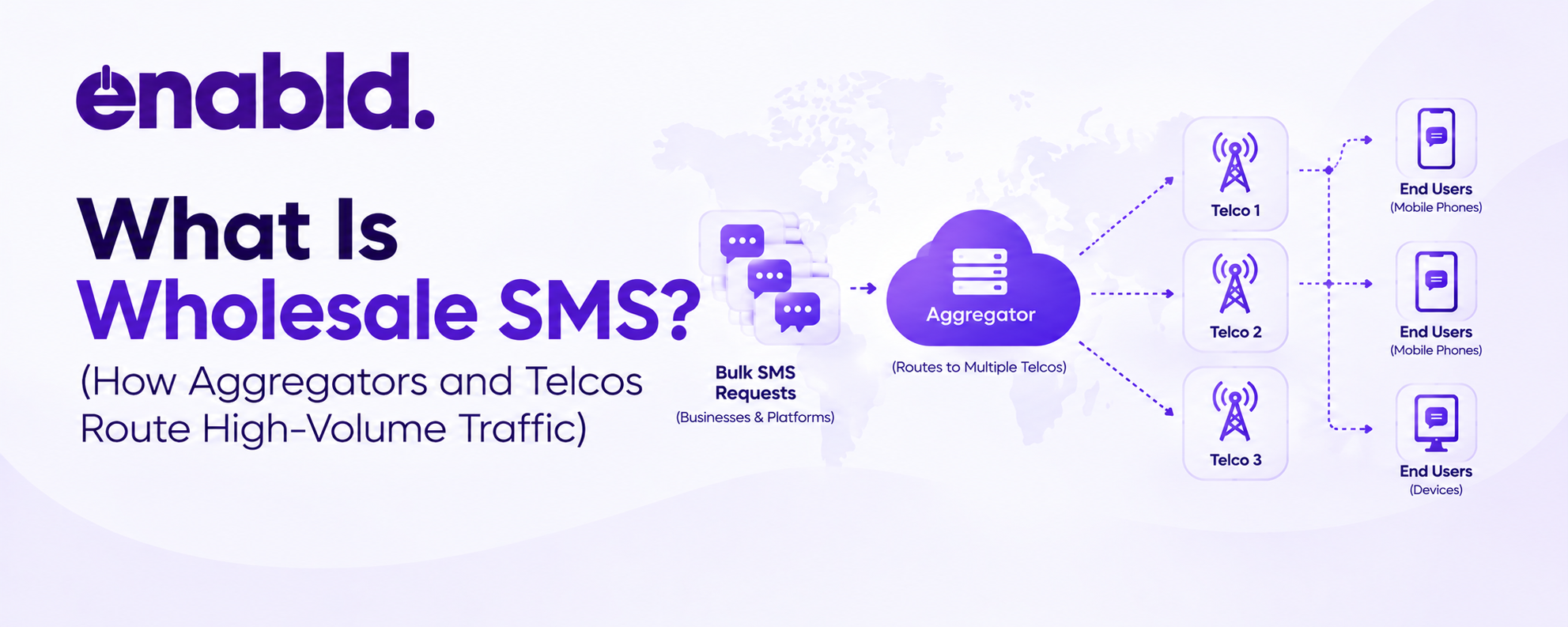
An SMS aggregator connects to many operators and other providers, then sells that reach to customers through a single interface. Aggregators earn margin by buying routes at one price and selling them at another, and by adding routing quality, reporting, and support on top.
CPaaS Providers and Enterprises
CPaaS providers buy wholesale traffic to power their messaging APIs. Large enterprises sometimes buy directly when their volumes justify it. Both want predictable delivery, clear reporting, and competitive rates. Some MVNOs also buy wholesale traffic to launch their own messaging services, and our guide on MVNO vs MNO explains why messaging is such a common add-on for them.
Resellers and Sub Aggregators
Smaller providers buy from larger ones and resell to their own customer base. This creates layers in the chain, which is one reason route transparency and quality control matter so much.
How Wholesale SMS Works
A wholesale message passes through a platform that receives it, decides where to send it, and tracks the result.
Step by Step
- A customer connects to the wholesale platform, usually over SMPP or an HTTP API.
- The customer submits a message with a sender ID, destination number, and content.
- The platform checks the customer’s account, rate plan, and available balance or credit.
- The routing engine chooses an upstream route for that destination.
- The platform forwards the message to the chosen vendor or operator.
- A delivery receipt returns upstream and is passed back to the customer.
- The platform bills the customer at the sell rate and records the cost at the buy rate.
Customer Side and Vendor Side
A wholesale platform has two faces. On the customer side, clients connect to send traffic. On the vendor side, the platform connects out to operators and upstream providers to deliver it. The routing engine sits in the middle and connects the two. Our guide on what the SMPP protocol is covers how those connections and sessions work in detail.
Understanding SMS Wholesale Routes
A route is the path a message takes to reach a destination network. Routes are the product a wholesale provider sells, and their quality decides how well the business performs.
Direct Routes
A direct route connects the provider straight to the destination operator. These routes tend to offer better delivery rates, faster speeds, and more accurate delivery receipts, and they usually cost more.
Indirect and Hub Routes
An indirect route passes through one or more intermediaries before reaching the operator. These are often cheaper and cover more destinations, but each extra hop adds risk to delivery quality, speed, and reporting accuracy.
Grey Routes
Grey routes deliver A2P traffic through channels meant for person to person messaging, which bypasses commercial A2P rates and controls. They can look cheap, but they carry real risks, including unreliable delivery, blocked traffic, and lost revenue for operators. Operators actively fight them, as explained in the fraud section below.
Route Quality Factors
When comparing routes, wholesale buyers typically look at:
- Delivery rate and delivery speed
- Accuracy of delivery receipts
- Sender ID handling and whether it is preserved
- Stability and uptime
- Compliance with local rules and operator policies
A2P Wholesale SMS
A2P stands for application to person. It covers messages sent by software to a handset, such as one time passwords, alerts, reminders, and promotions. This is the traffic that wholesale SMS mainly exists to carry.
Why A2P Is the Core of Wholesale
A2P volume is large, growing, and commercially valuable to operators. Because it is sent by businesses, operators price it separately from consumer messaging and often apply stricter rules, such as sender ID registration and content filtering, depending on the market.
A2P Traffic Types
| Traffic Type | Example | Typical Needs |
|---|---|---|
| Authentication | One time passwords, login codes | High speed, high delivery rate |
| Transactional | Order updates, bank alerts | Reliable delivery, accurate receipts |
| Promotional | Offers, campaign messages | Low cost, compliance with opt in rules |
| Conversational | Two way support messages | Inbound routing, sender continuity |
Authentication traffic usually commands higher rates because delivery speed and success matter most. Promotional traffic is more price sensitive.
How Wholesale SMS Is Priced
Wholesale pricing is built on the difference between buy rates and sell rates.
Rate Cards
A rate card lists the price per message for each destination, often down to the individual operator network. Rates may differ by route type, traffic type, and volume tier. Wholesale buyers compare rate cards across providers to find the best balance of cost and quality.
Margin and Route Costs
A wholesale provider earns margin on the gap between what it pays upstream and what it charges customers. That gap can be thin on competitive destinations, so providers watch cost per route closely and rely on automation to protect it. Our overview of SMS wholesale management explains how rate cards, margin, and routing connect.
Least Cost Routing and Quality Routing
Least cost routing sends each message down the cheapest available route. Quality routing sends it down the route with the best delivery performance. Strong platforms balance the two, using cost as the default and switching to quality routes for traffic where delivery matters most, such as one time passwords.
What a Wholesale SMS Platform Does
A wholesale SMS platform is the system that runs all of this at scale. The core functions include:
- Receiving traffic from customers over SMPP and HTTP
- Routing messages by destination, rate plan, and route performance
- Failing over automatically when a route or bind degrades
- Tracking delivery receipts and matching them to messages
- Billing customers and recording vendor costs
- Reporting by customer, route, and destination
Why Manual Management Breaks Down
Spreadsheets and manual route changes work at small volume. As traffic grows across more customers and vendors, rate changes, route failures, and billing errors multiply. A platform automates those tasks so the business can scale without adding proportional headcount.
Fraud and Security in Wholesale SMS
High volume traffic attracts abuse, and wholesale providers have to protect both their customers and their upstream partners.
Common Risks
- Spam and phishing sent through legitimate looking routes
- Grey route traffic that avoids A2P rates and controls
- Artificially inflated traffic, where messages are generated to collect revenue
- Spoofed or unregistered sender IDs
Protecting the Network
A well run platform pairs routing with an SMS firewall, number validation, and per account limits on rate and sender IDs. These controls block bad traffic before it reaches subscribers or costs the provider revenue, and they help protect relationships with upstream operators.
Wholesale SMS and CPaaS
Wholesale SMS and CPaaS are closely linked. A CPaaS platform presents messaging as an API for developers, while wholesale routes provide the delivery capacity underneath. Our guide on what CPaaS is explains the platform side, and our post on what a telecom API is covers how the API layer connects to the network.
For telcos and aggregators, this creates two options. A provider can sell wholesale traffic to other businesses, or it can build a branded CPaaS and sell messaging directly to enterprises. Through CPaaS enablement, many operators do both, selling wholesale capacity while launching their own branded platform on the same infrastructure. The buy versus build question is covered in our guide to white label CPaaS vs building from scratch.
How to Choose a Wholesale SMS Platform
When comparing platforms, check these points:
- Support for SMPP, HTTP, and SS7 connectivity (see our comparison of SMPP vs HTTP SMS APIs for when each fits)
- Routing logic, failover, and least cost or quality routing options
- Rate card management and automated billing
- Delivery receipt accuracy and reporting by route and destination
- Fraud and security controls on every connection
- Scalability for growth in traffic and partners
Enabld’s SMS gateway platform supports wholesale routing alongside SMPP, HTTP, and SS7, so operators and aggregators can manage customers, vendors, and billing in one system. It also forms the messaging base for a branded CPaaS platform.
Final Thoughts
Wholesale SMS is where message delivery becomes a business. Operators own the final connection, aggregators pool reach and routes, and platforms keep the traffic moving, priced, and protected. The providers that do well are the ones that control route quality, protect their margin with automation, and guard against fraud. If you are building a wholesale messaging business or want to manage your routes more effectively, talk to the Enabld team about your traffic and your setup.
Frequently Asked Questions
What is wholesale SMS?
Wholesale SMS is the sale of SMS delivery capacity in bulk between operators, aggregators, and messaging providers. Buyers purchase large volumes of traffic at negotiated rates and resell it or use it to power their own services.
What is the difference between wholesale SMS and bulk SMS?
Bulk SMS usually means a business sending many messages to its own customers, often through a portal or API. Wholesale SMS is the business to business trade in delivery capacity that sits behind it. Bulk SMS wholesale providers sell that capacity to resellers and platforms.
What is an SMS aggregator?
An SMS aggregator connects to many operators and providers and sells access to them through one interface. It earns margin on the difference between its buy rates and sell rates, and adds value through routing quality, reporting, and support.
What are SMS wholesale routes?
Routes are the paths messages take to reach a destination network. They can be direct to the operator or indirect through intermediaries, and they differ in cost, delivery rate, speed, and reporting accuracy.
What is A2P wholesale SMS?
A2P wholesale SMS is application to person traffic, such as one time passwords and alerts, sold in volume between businesses. It is the main type of traffic carried over wholesale routes.
How is wholesale SMS priced?
Pricing is based on rate cards that set a per message rate by destination and often by operator. Providers earn margin on the gap between the rate they pay upstream and the rate they charge customers.
What is a wholesale SMS platform?
It is the system that receives traffic from customers, routes it across upstream vendors, tracks delivery receipts, handles billing, and reports on performance. It automates tasks that become unmanageable by hand at high volume.
Why do grey routes matter in wholesale SMS?
Grey routes carry A2P traffic through channels meant for person to person messaging. They can be cheap, but delivery is unreliable, they are often blocked, and they cost operators revenue. Reputable providers avoid them.
Can a telco sell both wholesale SMS and CPaaS?
Yes. Many telcos sell wholesale capacity to other businesses while launching their own branded CPaaS for enterprises and developers, using the same messaging infrastructure for both.