In a world where customers juggle multiple apps and channels, reaching them where they’re most active is no longer optional—it’s essential.
Multichannel messaging with SMS and WhatsApp helps businesses connect with customers on their preferred platforms. Whether it’s a quick promotional update or a service alert, you can reach customers instantly, no matter where they are.
By combining SMS’s reliability with WhatsApp’s conversational flexibility, businesses can create more engaging and personalized interactions. This not only helps boost response rates and engagement but also drives higher conversions.
Moreover, it ensures timely, consistent delivery—so your marketing and service messages always land where they matter most.
In this blog, you will get to explore how to harness the power of multichannel messaging to improve campaign performance and customer experience. Also, when backed by an enterprise-grade SMS Gateway platform and robust WhatsApp integration, how brands can automate journeys, personalize at scale, and achieve telecom-grade delivery across the globe.
Table of Contents
- What is Multichannel Messaging?
- Key Stats Related to Multichannel Messaging
- Why Multichannel Messaging Matters
- SMS + WhatsApp: The Ultimate Duo
- SMS vs WhatsApp: Strengths of Each
- Why You Need Both, Not Either
- Use Cases: SMS + WhatsApp Together
- Integrating WhatsApp Business API into Your Current Systems
- Designing Cross-Channel Journeys: Practical Patterns
- Best Practices for Multichannel Messaging Marketers
- Conclusion
What is Multichannel Messaging?Multichannel messaging means using more than one communication channel such as SMS, WhatsApp, email, and push notifications to deliver seamless, relevant messages to the customers across their preferred channels. |
Key Stats Related to Multichannel Messaging
Studies show that multichannel campaigns can significantly boost engagement as compared to single-channel efforts because different audiences prefer different platforms and interaction styles. Here are some of the key stats related to multichannel messaging and its effectiveness in today’s marketing world.
Multi-Channel Marketing Statistics by Channel
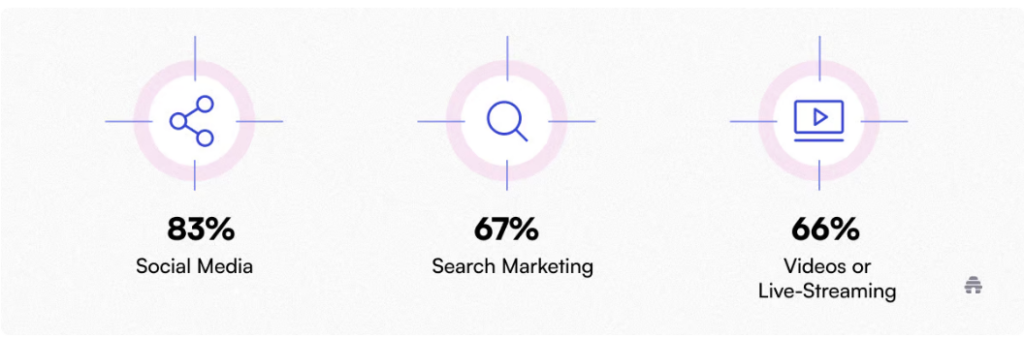
- As per a source, about 83% of marketers use social media, 67% use search marketing, and 66% use videos or live-streaming.
- Around 86% of marketers say multichannel marketing is becoming more effective.
- As per an analysis, the Multichannel Marketing industry is expected to grow from 192.91 USD Billion in 2025 to 349.74 USD Billion by 2035, exhibiting a compound annual growth rate (CAGR) of 6.13 during the forecast period 2025 – 2035.
Why Multichannel Messaging Matters?
Today, multichannel messaging matters more than ever. The key reason? Customers expect brands to meet them on their terms—across SMS, WhatsApp, email, and more, driving higher engagement and loyalty in a fragmented digital world.
As mentioned above in the blog, multichannel messaging empowers businesses to connect with customers on their preferred platforms. Thereby, helps enhance engagement and loyalty in a crowded digital landscape. Some of the key benefits include-
- Higher engagement rates: Customers respond 3x more to messages across SMS, WhatsApp, and email than single-channel campaigns, as it matches their habits.
- Improved customer satisfaction: Seamless channel-switching reduces frustration, with 86% of consumers expecting consistent experiences wherever they are.
- Increased conversions: Personalized, timely outreach across channels purchase rates by 287% (nearly 3x) via relevant communication.
- Better loyalty and retention: Consistent branding builds trust, turning one-time buyers into repeat advocates in fragmented markets.
- Scalable global reach: Enterprise tools like SMS gateways ensure reliable delivery worldwide, ideal for B2B campaigns in telecom and SaaS.
SMS + WhatsApp: The Ultimate Duo
In today’s world, customers expect seamless updates wherever they are. They don’t want to switch channels to hear from a brand. That’s why integrating SMS and WhatsApp is no longer optional; it’s a marketing must-have for engagement, trust, and results.
For marketers, combining SMS and WhatsApp is particularly impactful because SMS provides universal reach and immediacy, while WhatsApp adds rich media, conversational depth, and lower per-message costs in many regions. This exceptional combination empowers brands to cover both time-sensitive alerts and interactive conversations across the full customer lifecycle.
When backed by an enterprise-grade SMS Gateway platform and robust WhatsApp integration, brands can-
- Automate journeys
- Personalize at scale, and
- Guarantee telecom-grade delivery worldwide
SMS vs WhatsApp: Strengths of Each
Let’s explore what makes SMS and WhatsApp shine individually and why they complement perfectly in multichannel strategies.
Aspect | SMS strengths | WhatsApp strengths |
Reach | Universal, no app or data | Wide but app-based |
Speed & reliability | Extremely fast, network-native | Fast; dependent on data |
Content | Text only (plus short links) | Text, images, video, buttons |
Best for | OTPs, alerts, short promos | Conversational sales, support |
Cost profile | Can be costly at scale | Often cheaper per rich message |
SMS is available on every mobile phone and doesn’t rely on data or apps to work. This makes it perfect for mission-critical alerts like OTPs, payment notices, and flash sales. SMS delivers near-instantly. It reaches customers in low-bandwidth areas. It even works where WhatsApp penetration is still developing.
WhatsApp, on the other hand, supports rich media, interactive buttons, catalogs, and two-way chat, making it most appropriate for personalized marketing, customer support, and sales conversations. WhatsApp, the world’s most used mobile messenger app, boasts over 3 billion monthly active users and handles more than 100 billion messages daily.
Since, customers spend many hours per month on WhatsApp and often respond quickly, it translates into strong conversion rates when brands use the channel effectively.
Why You Need Both, Not Either
No single channel covers every customer perfectly—smart marketers combine them for complete coverage.
Using only SMS limits customer experiences to one-way, short-format notifications without visual content or complex journeys. In contrast, relying solely on WhatsApp risks missing users without the app, limited data, or in low-adoption regions.
A combined approach positions WhatsApp as the primary channel for conversational, rich-media interactions, while SMS serves as a universal fallback for urgent transactional messages. This boosts visibility, protects critical workflows like OTPs and payments, and optimizes campaign costs.
Use Cases: SMS + WhatsApp Together
Common high-ROI use cases for combining SMS and WhatsApp include:
- Lead Generation and Nurturing: Start with SMS for quick updates or urgent reminders, and then move the conversation to WhatsApp to share richer content like product details, FAQs, and personalized recommendations.
- E‑Commerce Promotions: Send instant flash sale alerts through SMS, then follow up on WhatsApp with eye-catching product images, catalog links, and gentle reminders for abandoned carts.
- Post‑Purchase CX: Share delivery updates or payment confirmations through SMS, then encourage customers to continue the conversation on WhatsApp for support, reorders, or feedback.
- Service and Support: Provide WhatsApp as the primary support channel with chatbots and handover to agents, falling back to SMS for escalations or where WhatsApp is not available.
Integrating WhatsApp Business API into Your Current Systems
The WhatsApp Business API enables businesses to send notifications, run promotions, and provide support at scale using approved templates and conversational flows. It also supports automation with chatbots, personalized broadcast campaigns, interactive buttons, and integration with payment gateways and CRMs.
To get the most out of it, integrate the WhatsApp API with your existing SMS gateway platform and marketing automation system. This way, you can manage all customer interactions from one place, keeping a unified view, building cross-channel segments, and automating WhatsApp or SMS messages based on behavior, consent, or business rules.
Designing Cross-Channel Journeys: Practical Patterns
A simple but effective strategy is “WhatsApp-first, SMS-fallback”: design flows to use WhatsApp when permitted and available, then fail over automatically to SMS when WhatsApp delivery is not possible. This approach works well for reminders, promo campaigns, and transactional alerts where delivery certainty matters.
Another pattern is role-based channel selection. Under this pattern, use SMS for initial alerts and triggers, then invite customers to continue the conversation on WhatsApp for detailed interaction. Brands can embed tracked links in SMS that deep link to WhatsApp chats or wa.me URLs, allowing an upgrade from one-way to two-way engagement in a single click.
Best Practices for Multichannel Messaging Marketers
To maximize results from SMS and WhatsApp integration, marketers should:
- Respect consent and compliance: Ensure opt-in and clear preference management for each channel to protect brand reputation and deliverability.
- Segment by behavior and value: Customize channel selection and frequency based on lifecycle stage, engagement history, and customer value to avoid fatigue.
- Align content with channel: Keep SMS concise and urgent, while using WhatsApp for storytelling, visuals, and conversational journeys.
- Track cross-channel performance: Monitor open rates, response rates, clicks, and conversions per channel and route, and feed that data back into routing and campaign logic.
To Sum Up
An SMS solution for enterprises that includes a telecom-grade SMS Gateway platform, SMS routing platform, and wholesale SMS gateway capabilities becomes the central hub for all A2P messaging, including multichannel use cases.
When connected with WhatsApp Business API and supported by ss7 solutions from a reliable ss7 service provider, it enables carrier-level delivery quality, intelligent routing, and rich conversational experiences in one unified stack.
This combination allows marketers to design sophisticated multichannel messaging strategies that boost reach, engagement, and ROI, while operations teams benefit from reliability, observability, and cost control at scale.
Ready to build your own messaging stack? Visit https://www.enabld.tech/ for more insights or schedule a demo today.