Missed appointments cost health systems a significant amount of revenue and clinical capacity every year, and a large share of those no-shows come down to something as simple as a patient forgetting. SMS reminders solve that problem more reliably than phone calls or portal notifications, but healthcare is one of the few industries where sending a text message the wrong way can create real compliance exposure. That combination, high value use case and strict regulatory requirements, is exactly why CPaaS healthcare adoption has grown so quickly among hospitals, clinics, and digital health platforms.
This guide covers what a healthcare messaging API actually needs to support, what makes HIPAA compliant SMS different from an ordinary text message, and how health systems are structuring appointment reminders and patient notifications around CPaaS infrastructure.
Quick Answer: CPaaS for healthcare means using communication APIs, SMS, voice, and secure messaging, to power patient facing workflows like appointment reminders, notifications, and two way communication, built on infrastructure that supports the encryption, access controls, and Business Associate Agreements required for HIPAA compliance.
What Is CPaaS for Healthcare?
A healthcare messaging API gives clinical and administrative systems a way to send and receive patient communication programmatically, appointment confirmations, reminder texts, prescription ready alerts, and post-visit follow ups, without a health system needing to build telecom infrastructure from scratch. Instead of a receptionist calling every patient on tomorrow’s schedule, a scheduling system triggers an automated SMS the moment an appointment is booked, then follows up again closer to the visit date.
The reason this sits under the CPaaS umbrella rather than a generic bulk texting tool is architecture. Healthcare communication has requirements that consumer messaging platforms are not built to meet, and a proper CPaaS layer is what lets a health system’s own systems, EHR, scheduling software, patient portal, trigger messages directly through APIs while keeping the underlying infrastructure secure and auditable.
Why Health Systems Use CPaaS for Patient Communication
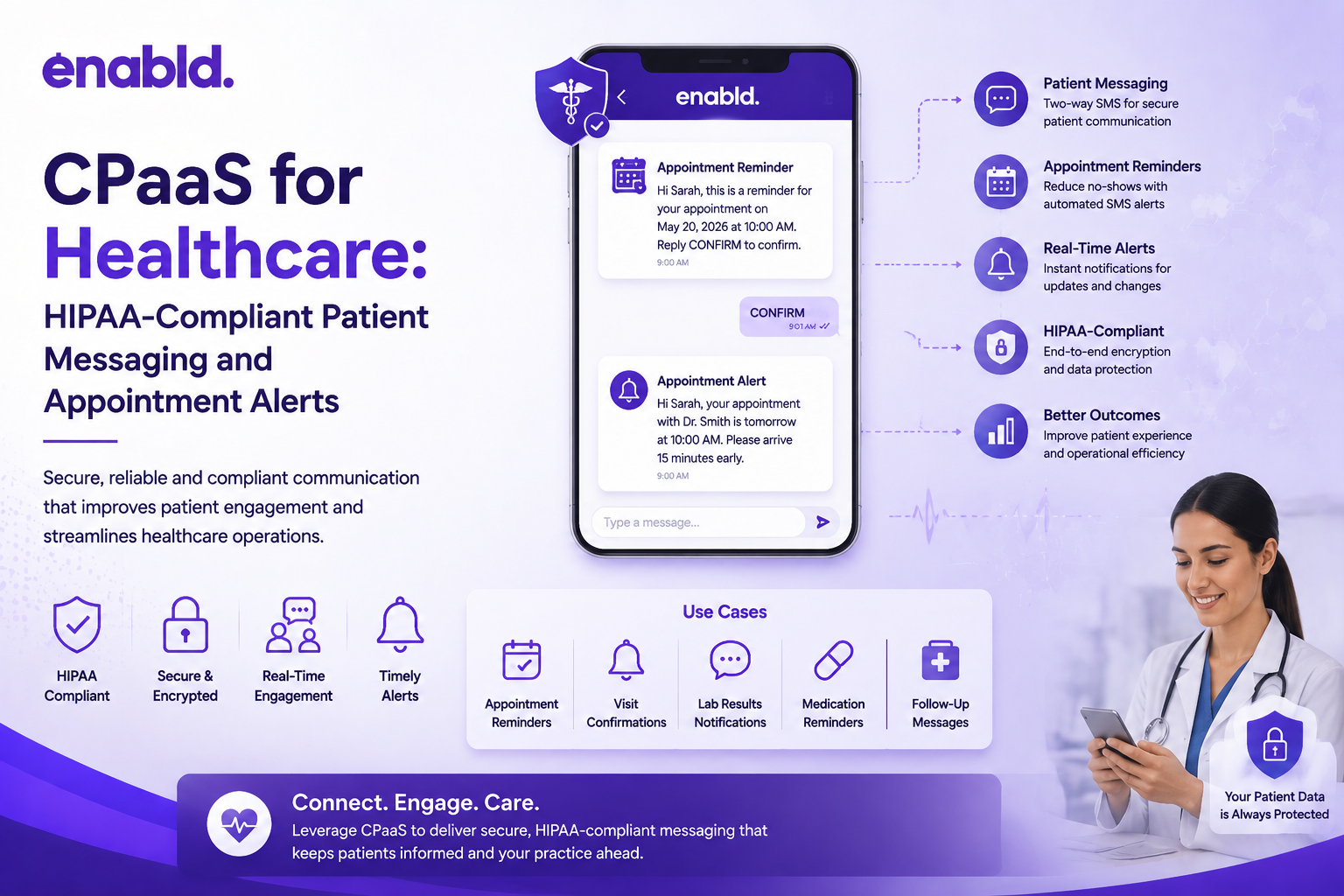
A handful of use cases show up repeatedly across hospitals, clinics, and digital health platforms. Appointment reminders remain the most common, since a well timed SMS meaningfully reduces no-show rates. Prescription ready notifications let pharmacies alert patients the moment a refill is available. Post-discharge follow up messages check in on recovery and flag when a patient should call in. Lab result notifications alert a patient that results are available without exposing the actual clinical data in the message itself. Two way messaging lets patients confirm, reschedule, or cancel an appointment by simply replying to a text, which cuts down front desk call volume considerably.
Is SMS HIPAA Compliant? What Actually Determines That
This is where a lot of confusion comes in, and it is worth being precise about it. Standard SMS, the kind sent from a personal phone, is not encrypted end to end and passes through carrier networks that are outside a healthcare organization’s control. That does not automatically make SMS unusable for patient communication, but it does mean HIPAA compliant SMS is less about the protocol itself and more about how a health system architects the messaging workflow around it.
In practice, that means keeping actual Protected Health Information out of the message body itself, using generic language like “You have an appointment reminder, tap here to view details” rather than naming a diagnosis or treatment in the text. It means the platform sending the message needs to support encryption in transit, maintain audit logs of what was sent and when, restrict system level access to authorized personnel, and be willing to sign a Business Associate Agreement with the healthcare organization, since HIPAA extends compliance obligations to any vendor handling PHI on a covered entity’s behalf.
What a HIPAA-Ready Messaging Architecture Needs
| Requirement | What It Means in Practice |
|---|---|
| Business Associate Agreement | The vendor is contractually obligated to protect PHI under HIPAA |
| Encryption in transit | Data moving between systems and the messaging platform is encrypted |
| Access controls | Only authorized personnel and systems can access message logs and PHI |
| Audit logging | Every message sent, received, and accessed is tracked and reviewable |
| Content minimization | Message bodies avoid exposing PHI directly, using secure links instead |
| Patient consent and opt-in | Patients have explicitly agreed to receive SMS communication from the provider |
Patient Notification SMS Best Practices
Getting patient notification SMS right comes down to a few consistent habits. Keep the message itself generic and route anything sensitive to a secure, authenticated portal link rather than the text body. Always collect explicit opt-in consent before sending, and make opting out simple, since that is both a compliance expectation and a trust building practice with patients. Use two way messaging so patients can confirm or cancel with a single reply instead of calling in, and keep message timing predictable so reminders feel helpful rather than intrusive.
Appointment Reminder CPaaS: Reducing No-Shows in Practice
Appointment reminder CPaaS workflows typically layer several touchpoints rather than relying on a single message. A confirmation goes out the moment a visit is booked, a reminder follows a day or two before the appointment, and a same day nudge goes out a few hours ahead for higher acuity visits. Two way SMS lets the patient reply to confirm, reschedule, or cancel directly, which feeds that response straight back into the scheduling system through the same API connection. Clinics running this kind of layered reminder sequence consistently see meaningful reductions in no-show rates compared to single touch or call only outreach.
How Larger Health Systems Structure Messaging
Health system messaging at scale looks different from a single clinic sending appointment texts. A multi facility hospital network typically needs a messaging layer that plugs into several different EHR and scheduling systems at once, supports high message volume across departments, and gives compliance and IT teams centralized visibility into what is being sent across the entire organization rather than department by department. This is where a proper CPaaS layer earns its place, since it becomes shared infrastructure that every department can build patient communication workflows on top of, instead of each team standing up its own disconnected texting tool.
How Enabld Supports Healthcare Messaging Workflows
Enabld’s enterprise messaging platform and CPaaS platform give health systems and digital health platforms the API layer needed to build appointment reminders, notifications, and two way patient messaging directly into their existing scheduling and EHR systems. Reliable delivery matters just as much as compliance in this context, since a reminder that arrives late or fails silently defeats the purpose entirely, which is part of why the underlying SMS gateway platform is built around carrier-grade routing and delivery reporting rather than a best effort bulk messaging tool. Healthcare organizations evaluating a vendor for this kind of workflow should always confirm BAA availability and specific compliance documentation directly as part of procurement, since requirements vary by use case and jurisdiction.
Final Thoughts
CPaaS gives health systems the flexibility to build patient communication that actually fits their workflows, appointment reminders, notifications, and two way messaging, without treating every text as a generic broadcast. The compliance side is not something to bolt on afterward. It has to be part of the architecture from the start, from how content is written to how the underlying messaging infrastructure handles encryption, access, and audit logging. This article is intended as general guidance rather than legal advice, and healthcare organizations should confirm HIPAA compliance requirements with their own legal and compliance teams. If you are building patient messaging workflows and need infrastructure designed around reliability and compliance requirements, talk to the Enabld team about your specific use case.
Frequently Asked Questions
What is CPaaS in healthcare?
CPaaS in healthcare refers to using communication APIs, primarily SMS and voice, to power patient facing workflows like appointment reminders and notifications, built on infrastructure designed to support HIPAA compliance requirements.
Is standard SMS texting HIPAA compliant?
Standard SMS is not encrypted end to end, so compliance depends on how the message is structured and what infrastructure sends it, not the SMS protocol itself. Keeping PHI out of the message body is essential.
Do healthcare organizations need a Business Associate Agreement with their messaging vendor?
Yes. Any vendor that handles Protected Health Information on behalf of a covered healthcare entity is generally required to sign a Business Associate Agreement under HIPAA.
How does CPaaS help reduce patient no-shows?
CPaaS enables automated, layered appointment reminder sequences, confirmation, reminder, and same day nudge, along with two way replies that let patients confirm or reschedule directly by text.
What should and should not be included in a patient notification SMS?
Notifications should use generic language and avoid naming diagnoses, test results, or treatment details directly, instead directing patients to a secure, authenticated portal for specifics.
Can patients reply to appointment reminder texts?
Yes, most CPaaS healthcare messaging workflows support two way SMS, allowing patients to confirm, cancel, or reschedule an appointment with a simple reply.
Is CPaaS only useful for large hospital systems?
No. Individual clinics and small practices use CPaaS for appointment reminders and patient notifications just as often as large, multi facility health systems.
How does a healthcare messaging API integrate with an EHR or scheduling system?
It typically connects through APIs that trigger messages automatically based on events in the EHR or scheduling system, such as a new booking, a cancellation, or an upcoming visit.