Today, telecom operators and Communication Service Providers (CSPs) are looking for new revenue opportunities beyond traditional voice and data services. One of the fastest growing opportunities is offering CPaaS under their own brand. At the same time, enterprises continue using CPaaS to power customer communications, from one time passwords to appointment reminders to WhatsApp order updates.
This guide explains what CPaaS is, how it works, and why it has become a strategic growth opportunity for operators and enterprises alike. Along the way, we will walk through a clear CPaaS definition, look at real CPaaS examples, compare CPaaS vs PaaS, and point out a few CPaaS providers worth knowing in 2026.
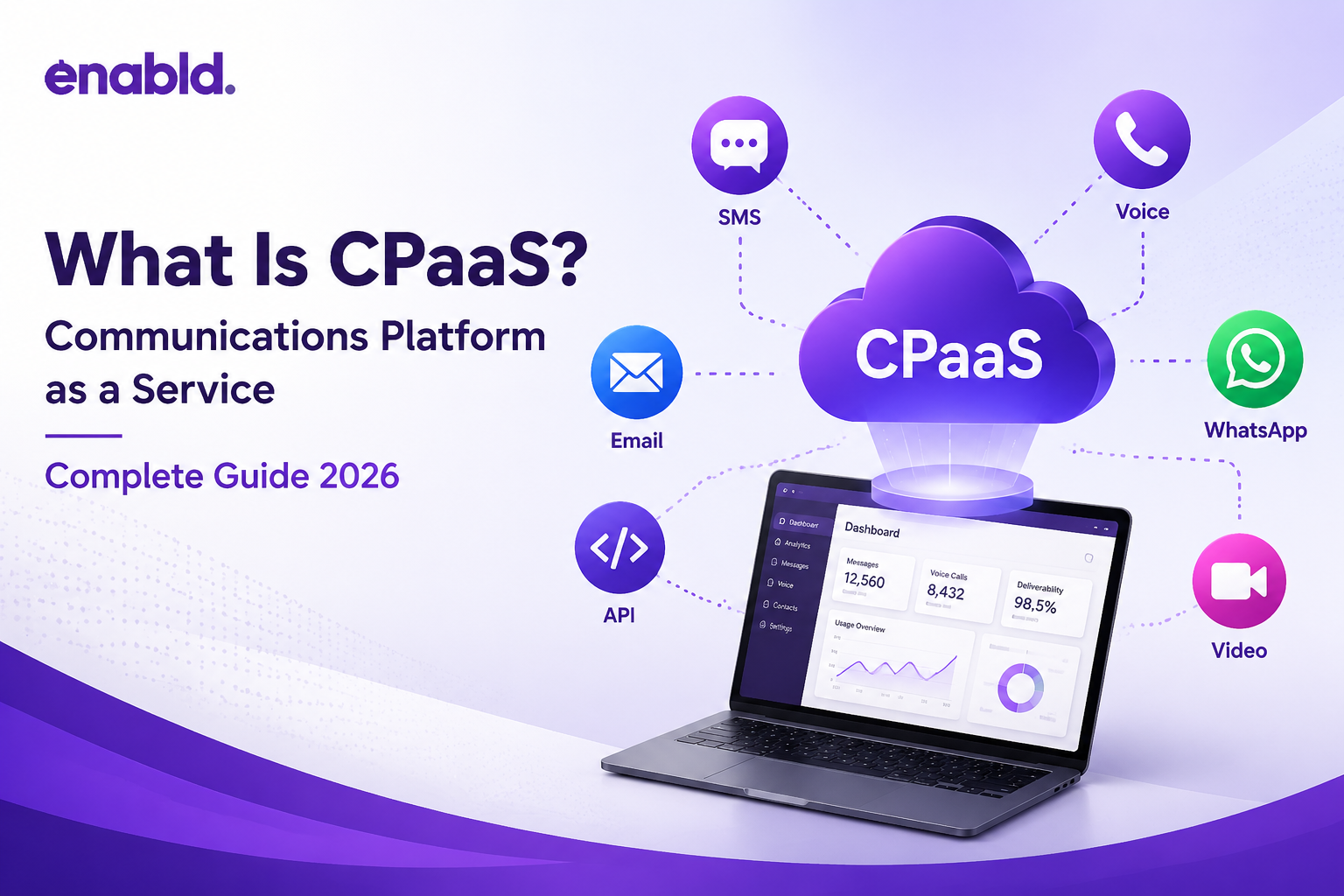
Quick Answer: CPaaS, or Communications Platform as a Service, is a cloud based platform that gives businesses ready made APIs to add SMS, voice, video, WhatsApp, and email directly into their own apps and systems, without building carrier infrastructure from scratch.
What Is CPaaS? A Simple CPaaS Definition
CPaaS stands for Communications Platform as a Service. At its core, a CPaaS definition looks like this: it is a cloud based platform that gives developers ready made building blocks, known as APIs, to add communication features such as SMS, voice calls, video, chat apps, and email directly into their own software, apps, or websites.
Before CPaaS existed, adding something as simple as SMS notifications to an app meant negotiating directly with telecom carriers, buying hardware, and managing complex signaling protocols. That process could take months and required deep telecom expertise. Communications Platform as a Service removed that barrier. A developer can integrate SMS or voice capabilities significantly faster than building telecom infrastructure from scratch.
Think of it like electricity. A business does not build its own power plant to run its office lights. It simply plugs into the grid. CPaaS works the same way for communication. Companies plug into a communication platform instead of building carrier relationships, servers, and routing logic on their own.
How Does CPaaS Work?
A CPaaS platform sits between the business application and the underlying telecom network. When a company wants to send an SMS alert, trigger a voice call, or open a WhatsApp conversation, its application makes an API request to the provider, which routes that message or call through its carrier connections and delivers it to the end user, often within seconds.
Most platforms, including a solution like Enabld’s CPaaS platform, add value beyond raw delivery, such as intelligent routing, delivery reporting, number management, and security features like encryption and fraud filtering. That extra layer is what separates a basic messaging gateway from a true cloud communication platform.
Why Telecom Operators Are Adopting White-label CPaaS
For telecom operators and CSPs, CPaaS is not just a developer tool, it is a growth strategy. Rather than watching over the top messaging apps and third party platforms capture customer communication revenue, operators can offer that same capability themselves. A white label CPaaS approach typically helps operators:
- Launch new messaging revenue streams beyond traditional voice and data plans
- Offer enterprise messaging, voice, and omnichannel services under their own brand
- Expand beyond traditional voice and SMS into richer channels like WhatsApp and RCS
- Own the customer relationship instead of losing it to outside vendors
- Avoid building an entire platform internally, which shortens time to market considerably
CPaaS vs PaaS: Understanding the Difference
People often confuse CPaaS vs PaaS because both are cloud service models, but they solve very different problems.
PaaS, or Platform as a Service, gives developers a broader environment to build, run, and manage entire applications. Think of tools that provide servers, databases, and runtime environments so a team does not need to manage physical infrastructure. It is a general purpose foundation for building software.
CPaaS is narrower and more specialized. It focuses purely on communication. Instead of giving you a full application environment, it gives you specific, ready to use communication building blocks such as SMS APIs, voice APIs, and messaging APIs that you drop into an application you are already building, possibly on top of a PaaS environment. In short, PaaS helps you build the house, and CPaaS wires it for phone and internet.
Here is a quick side by side comparison:
| Aspect | CPaaS | PaaS |
|---|---|---|
| Primary focus | Communication only, such as SMS, voice, video, chat | Full application development and hosting environment |
| What you get | Ready to use APIs for messaging and calling | Servers, databases, and runtime environments |
| Typical use case | Adding SMS alerts, OTPs, WhatsApp, or voice to an existing app | Building and deploying an entire software application |
| Integration effort | Plug in an API, live within days | Broader development effort across the full stack |
| Who uses it | Enterprises, telecom operators, and CSPs adding communication features | Developers building and hosting complete applications |
Key Features Every CPaaS Platform Should Offer
A strong communications platform as a service typically includes a consistent set of capabilities, regardless of which provider you choose.
Multi Channel Messaging APIs
Support for SMS, voice, WhatsApp Business, RCS, and email through a single set of developer friendly APIs, so businesses are not stitching together separate vendors for each channel.
Programmable Voice
The ability to make, receive, and control phone calls programmatically, including call routing, recording, and interactive voice response menus.
Number Management
Provisioning and managing virtual numbers, toll free numbers, and short codes across countries, which is especially useful for businesses operating in multiple markets. Enabld’s cloud numbers platform is a good example of this in action.
Security and Compliance
Encrypted data transport, fraud protection, and compliance friendly routing, which matters more every year as regulators tighten rules around messaging and caller verification.
Analytics and Reporting
Real time dashboards that show delivery rates, traffic patterns, and channel performance so teams can make informed decisions instead of guessing.
Real World CPaaS Examples
Understanding CPaaS examples makes the concept much easier to grasp than definitions alone.
A ride share app sending you a text with your driver’s name and license plate is a CPaaS example in action. A bank sending a one time password to verify your login is another. An airline notifying you about a gate change through WhatsApp uses the same underlying idea. Even the appointment reminder your dentist’s office texts you a day before your visit is running on top of a communications platform as a service behind the scenes.
Telecom operators and communication service providers are increasingly building their own branded versions of these platforms rather than reselling someone else’s. This approach, often called white label CPaaS, lets a telco offer enterprise messaging, voice, and omnichannel APIs under its own name instead of losing that relationship to an outside vendor. It is one of the fastest growing paths for operators to unlock new revenue beyond traditional voice and data plans, and it connects closely with related tools like SMS gateway platforms and enterprise messaging solutions.
Popular CPaaS Providers in 2026
The CPaaS market includes a wide range of providers, from large global names to specialized platforms built specifically for telecom operators.
Some providers sell directly to enterprises that want to add communication features to their own apps. Others, like Enabld, focus on enabling telecom operators, MVNOs, and communication service providers to launch their own fully branded CPaaS platforms rather than simply reselling a third party product. That distinction matters a lot if you are an operator trying to protect your brand and your margins. If you want a deeper look at how that ecosystem is structured, our breakdown of how the CPaaS enablement ecosystem works walks through the layers and revenue flows in detail.
While many CPaaS providers sell communication services directly to enterprises, Enabld follows a different approach by enabling telecom operators and CSPs to launch their own fully branded CPaaS platform. This allows operators to retain customer ownership, strengthen their brand, and build recurring messaging revenue rather than reselling third party services.
When evaluating CPaaS providers, look closely at network reach, uptime guarantees, pricing transparency, security certifications, and how quickly their team supports onboarding. A checklist like our guide on choosing the best CPaaS enabled service provider can help narrow the list.
Who Actually Uses CPaaS?
CPaaS is used far more broadly than most people realize. Enterprises use it to send appointment reminders, marketing campaigns, and two factor authentication codes. Telecom operators and CSPs use it to launch new revenue generating services under their own brand instead of watching over the top apps capture that value. Software companies embed it directly into their products so customers get built in messaging or calling without leaving the app. Even healthcare providers, logistics companies, and financial institutions rely on it daily for time sensitive, high volume communication.
Benefits of CPaaS for Businesses
The appeal of communications platform as a service comes down to speed, cost, and flexibility. Businesses avoid building carrier relationships from the ground up, launch new communication features in days instead of months, and gain access to multiple channels through one integration instead of managing separate vendors. Because most platforms are usage based, businesses also only pay for what they actually send or receive, keeping costs predictable as they scale.
How to Choose the Right CPaaS Provider
Not every platform fits every business. A startup adding SMS verification has very different needs than a telecom operator trying to launch a full CPaaS enablement business under its own brand. Before choosing a provider, it helps to clarify your channel needs, expected volume, compliance requirements, and whether you want a platform you can fully white label or simply an API you plug into. Speaking with a team that has supported both enterprises and operators, such as through a quick consultation, can save weeks of trial and error.
Final Thoughts
CPaaS has quietly become one of the most important pieces of infrastructure behind modern digital communication. Whether you are a developer adding SMS alerts to an app, an enterprise running customer engagement campaigns, or a telecom operator looking to launch your own branded communications business, understanding what CPaaS is and how it works puts you in a much stronger position to choose the right platform and partner for 2026 and beyond.
If you’re a telecom operator, CSP, MVNO, VoIP provider, or wholesale carrier looking to launch your own messaging business, a white label CPaaS platform can help you accelerate time to market while keeping your brand and customer relationships at the center. Talk to the Enabld team to see how a fully branded CPaaS platform could work for your business.
Frequently Asked Questions
What does CPaaS stand for?
CPaaS stands for Communications Platform as a Service. It refers to a cloud based platform that lets businesses add communication features like SMS, voice, video, and chat into their own applications through APIs.
What is the simplest CPaaS definition?
In simple terms, CPaaS is a set of ready made communication tools that developers plug into their software instead of building calling, texting, or messaging systems from scratch.
What are some common CPaaS examples?
One time password texts, appointment reminder SMS, ride share driver notifications, and WhatsApp order updates are all everyday CPaaS examples most people interact with regularly.
What is the difference between CPaaS vs PaaS?
PaaS gives developers a broad environment for building and running entire applications, while CPaaS is a specialized layer focused purely on adding communication features like SMS and voice.
Who are typical CPaaS providers?
CPaaS providers range from large global platforms serving enterprises directly to specialized providers, like Enabld, that help telecom operators and CSPs launch fully branded CPaaS platforms of their own.
Is CPaaS only useful for large enterprises?
No. Startups, small businesses, telecom operators, and large enterprises all use CPaaS. The usage based pricing model makes it accessible regardless of company size.
How is CPaaS different from a basic SMS gateway?
A basic SMS gateway typically handles only text messages, while a true communications platform as a service supports multiple channels, including voice, WhatsApp, RCS, and email, through one unified set of APIs.
Can telecom operators build their own CPaaS platform?
Yes. Many telecom operators now launch white label CPaaS platforms so they can offer enterprise messaging and omnichannel services under their own brand instead of losing that business to outside vendors.