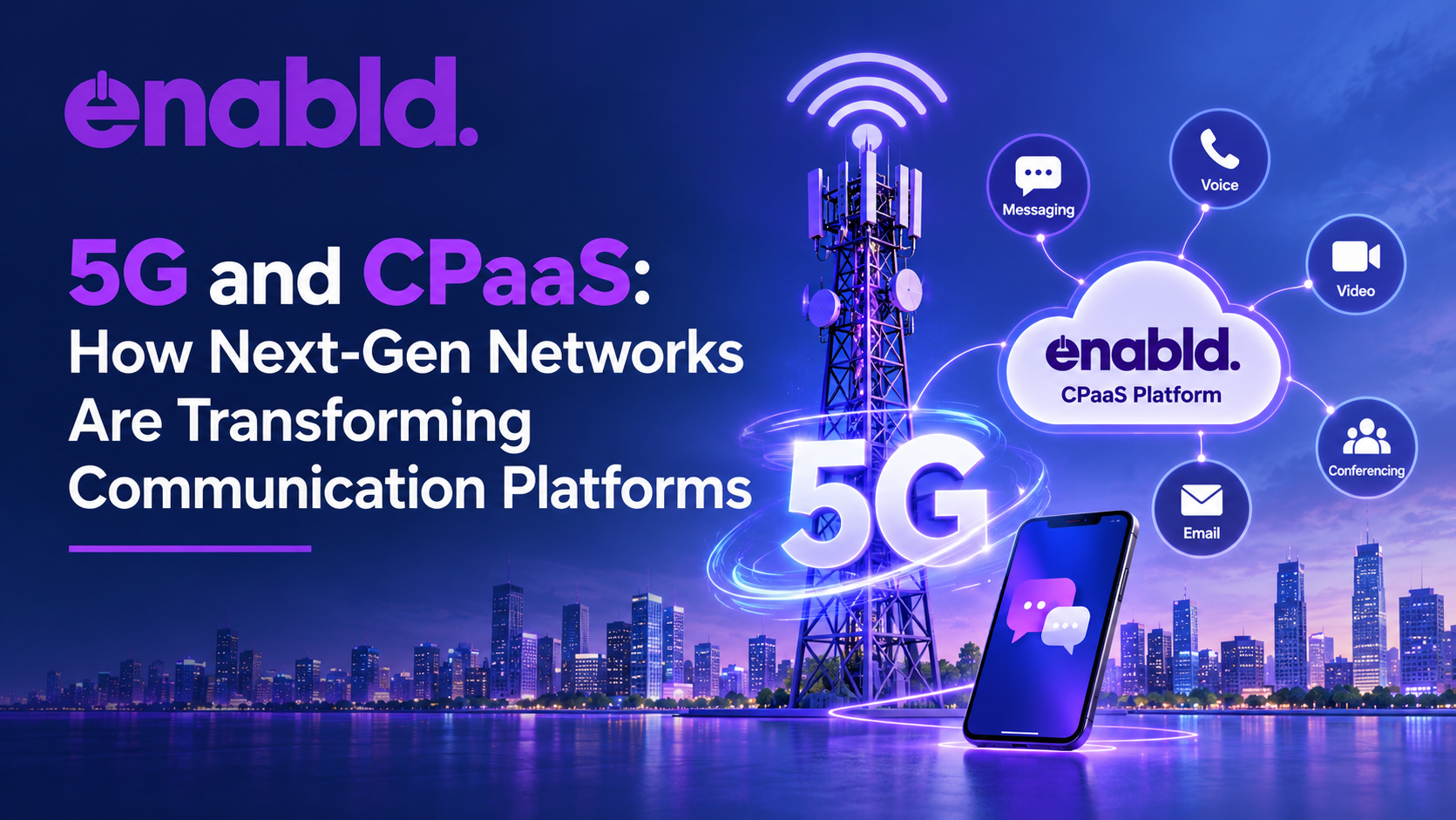
Every network generation arrives with big promises, and 5G has had plenty. For communication platforms, the honest picture is more specific. 5G does not replace SMS or rewrite how messages are routed. What it changes is the environment around them: faster data for richer channels, networks that can be programmed through APIs, and new ways for operators to package connectivity as a service.
This guide explains how 5G changes CPaaS, where the real opportunities sit, and what telcos should plan for.
Quick Answer: 5G changes CPaaS mainly in three ways. Faster, lower latency data makes rich channels like RCS, WhatsApp, and video work better. Standardized network APIs, such as number verification and SIM swap checks, let operators sell network capabilities to developers. And 5G standalone features like network slicing open possibilities for guaranteed quality on enterprise communication. SMS itself keeps working across 5G and remains the universal fallback.
How Does 5G Change CPaaS?
CPaaS has always sat on top of network capability, packaging it as APIs. As the network gets more capable, the set of things worth packaging grows. The effects are indirect but real, and they fall into three areas: richer messaging, programmable networks, and enterprise grade connectivity.
What 5G Does Not Change
SMS delivery does not depend on 5G speeds, and it continues to work on 5G networks through standardized mechanisms. The core routing, signaling, and interconnect work described in our guide on how an SMS gateway works still applies. Anyone selling 5G as an SMS upgrade is overselling it.
5G Messaging: Richer Channels Get Better
Rich channels travel over data, so better data helps them. RCS, WhatsApp, and in app messaging all rely on a solid data connection, and 5G improves speed, capacity, and responsiveness, especially in crowded areas.
What Improves for Users
Images, video, carousels, and interactive buttons load faster, and conversations feel more immediate. That supports use cases such as visual product catalogs, video support sessions, and richer notifications.
Why SMS Still Matters
Coverage is uneven, and not every recipient has a 5G device or data connection at the moment a message is sent. SMS remains the dependable base layer. Our guide on RCS vs SMS explains how the two coexist, and our comparison of WhatsApp vs RCS vs SMS shows how enterprises combine them with fallback.
5G Enterprise Messaging and Communication
For enterprises, the interesting shift is the combination of channels with a more capable network.
Real Time and Interactive Use Cases
Lower latency supports live video support, in app calling, and responsive conversational experiences that feel closer to a face to face interaction.
Machine and IoT Messaging
5G is designed to connect large numbers of devices. For communication platforms, that points toward more automated, device generated messaging, such as status alerts and two way control messages, alongside human conversations.
Omnichannel Orchestration
More channel options increase the value of one platform that coordinates them. Our guide to omnichannel communication and CPaaS covers how routing and fallback work across channels.
Network APIs and 5G API Monetisation
This is where 5G may matter most for operators. Network APIs expose parts of the network, such as identity checks and device status, as simple developer interfaces.
What Network APIs Do
Through the GSMA Open Gateway initiative and the CAMARA project, operators are standardizing APIs that work across networks. Common examples include:
- Number Verification: confirms the phone number a user claims matches the SIM on the connection
- SIM Swap: detects recent changes to the SIM tied to a number
- Device Status and Location Verification: reports whether a device is reachable or where it is
- Quality on Demand: requests a defined level of network quality for a session
Where the Market Stands
According to GSMA’s Q1 2026 update, Open Gateway covers 81 operator groups across 292 networks, representing roughly 80 percent of mobile connections, with 140 API instances commercially launched across 85 networks in 50 markets. Anti fraud APIs such as SIM Swap and Number Verification are the most commercially launched so far. Availability still varies by operator and market, so businesses should confirm what a given network actually offers.
Why This Connects to CPaaS
Network APIs fit naturally into the same developer facing products that already sell SMS and voice. Our guide on what a telecom API is explains how communication APIs work and why a gateway layer matters for access control and billing. An operator that already runs a CPaaS business has the portals, developer relationships, and metering needed to sell network APIs beside messaging.
A Point Telcos Should Weigh
Number Verification can reduce reliance on one time passwords by confirming identity silently over the mobile connection. That is good for user experience and fraud reduction, but it may shift some OTP messaging volume over time. Operators should plan their messaging and network API strategies together rather than separately.
5G Network Slicing and CPaaS
Network slicing lets an operator create logically separate networks on shared infrastructure, each with defined characteristics such as latency or reliability.
What It Could Mean for Communication
For enterprises that depend on real time communication, a slice or a quality on demand request could help guarantee performance for voice, video, or critical alerts. Examples include live video support, remote operations, and high priority communication during busy periods.
Realistic Expectations
Slicing depends on a 5G standalone core, and commercial availability differs widely between operators and countries. For CPaaS, treat slicing as an emerging option to monitor and pilot, not a feature to promise broadly today.
5G and CPaaS Opportunities at a Glance
| 5G Capability | What It Enables | CPaaS Relevance |
|---|---|---|
| Faster, lower latency data | Better RCS, WhatsApp, video | Richer channels and fallback logic |
| Massive device connectivity | More machine to person messaging | Automated alerts and two way device messaging |
| Network APIs (CAMARA, Open Gateway) | Identity, device status, location checks | New API products and fraud tools |
| Network slicing and quality on demand | Defined quality for sessions | Premium enterprise communication, still emerging |
| Programmable network exposure | Operators sell capabilities to developers | Fits existing CPaaS portals and billing |
What Telcos Should Do Now
Build on a Platform, Not a Pile of Integrations
Messaging, voice, and network APIs are easier to sell when they sit behind one developer experience, one billing layer, and one set of fraud controls. A CPaaS platform and a carrier grade SMS gateway platform provide that base, and CPaaS enablement lets operators launch it under their own brand without a long build.
Keep Fraud Protection in Place
New APIs and channels create new abuse paths. An SMS firewall and number validation stay important as the portfolio grows.
Plan the Business Case
Our guide on CPaaS for telecom operators walks through how operators build the commercial case for launching their own platform.
Final Thoughts
5G will not make SMS obsolete, and it will not turn CPaaS into something different overnight. Its value for communication platforms comes from better rich channels, programmable network capabilities, and enterprise grade connectivity options that operators can package and sell. The operators who benefit most will be those with a solid platform in place before those opportunities mature. If you are planning how messaging and network APIs fit together on your network, talk to the Enabld team about your roadmap.
Frequently Asked Questions
How does 5G change CPaaS?
5G improves the data connection that rich channels like RCS and WhatsApp rely on, supports network APIs that operators can sell to developers, and enables features like network slicing for enterprise communication. SMS delivery itself is largely unchanged.
Does 5G replace SMS?
No. SMS continues to work on 5G networks and remains the universal fallback, since it reaches every phone without needing a data connection or a particular app.
What are network APIs in 5G?
Network APIs expose network capabilities, such as number verification, SIM swap checks, device status, and quality on demand, as simple developer interfaces. Standards come from the CAMARA project and the GSMA Open Gateway initiative.
What is 5G API monetisation?
It means operators earn revenue by offering network capabilities as paid APIs to developers and enterprises, often through aggregators or their own developer portals, rather than selling connectivity alone.
What does network slicing mean for CPaaS?
Slicing could let operators offer defined quality for enterprise voice, video, or alerts. It depends on a standalone 5G core and varies by operator, so it is still an emerging option.
Will Number Verification reduce SMS OTP traffic?
It can for use cases where silent verification over the mobile connection replaces a one time password. Operators should consider how network APIs and messaging revenue work together in their plans.
Is 5G messaging different from RCS?
5G is a network technology, while RCS is a messaging standard. RCS runs over data and benefits from faster 5G connections, but it also works on other networks and is not exclusive to 5G.
Can an operator sell both messaging and network APIs together?
Yes. A CPaaS platform with developer portals, metering, and billing can package messaging, voice, and network APIs in one offer, though network API availability depends on what the operator exposes.