Telecom operators already own the things a messaging business runs on: carrier relationships, numbering resources, and customers who trust them. What many lack is a product to package those assets into something enterprises can buy. CPaaS enablement closes that gap by supplying the platform, so the operator can focus on selling.
This guide explains what CPaaS enablement is, what a launch involves, and how Enabld supports telcos, MVNOs, and CSPs at each stage.
Quick Answer: CPaaS enablement is the process and technology that lets a telecom operator or service provider launch its own branded CPaaS business without building the infrastructure itself. The enablement vendor provides the messaging and voice stack, routing, billing, portals, and support. The operator brings its brand, customers, and network relationships, and keeps the revenue and the customer ownership.
What Is CPaaS Enablement?
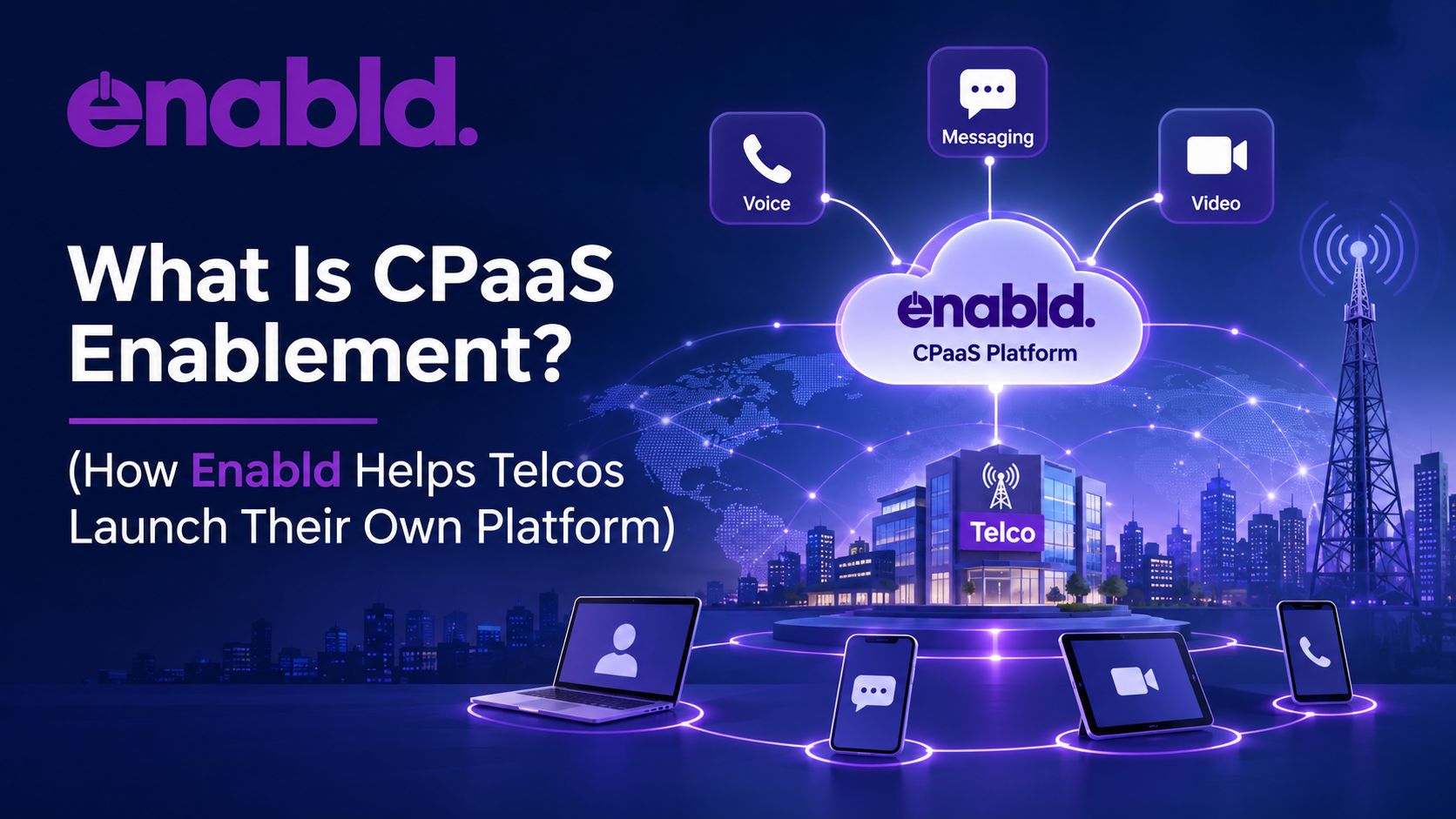
CPaaS enablement means giving an operator everything needed to operate as a communications platform provider. Instead of reselling someone else’s service, the operator runs a platform under its own name, sells messaging, voice, and other channels to businesses, and manages those customers directly.
If you need the basics of CPaaS first, our guide on what CPaaS is covers the definition and common examples.
Enablement vs Being a CPaaS Provider
A CPaaS provider sells communication services to end customers under its own brand. An enablement vendor supplies the technology behind an operator’s brand. We explain the distinction in depth in our post on a CPaaS enablement platform vs a CPaaS provider.
Who Needs It
Mobile operators, MVNOs, ISPs, ITSPs, aggregators, and other communication service providers that want to own the customer relationship and build recurring messaging revenue.
Why Telcos Choose Enablement Over Building
Building a CPaaS stack in house means signaling infrastructure, routing logic, billing, fraud controls, portals, and a team to maintain all of it. Enablement shortens that path and moves the cost from a large upfront build to a managed platform. Our comparison of white label CPaaS vs building from scratch goes through the trade offs in detail.
What the Operator Keeps
- The brand and the customer relationship
- Pricing and commercial terms
- Recurring A2P messaging revenue
- Control over routing and supplier choices
What a CPaaS Enablement Stack Includes
A complete stack covers the technical core and the commercial layer around it.
Messaging and Channel APIs
Enabld’s platform provides APIs for SMS, voice, WhatsApp, RCS, and email, along with two way SMS, HLR, and MNP lookups, so operators can offer omnichannel services from one place. The foundation is a carrier grade SMS gateway platform for routing and delivery. For how that layer works, see our explainer on how an SMS gateway works.
Infrastructure Management
Operators get control over their SMPP and SS7 interconnections without running a large in house networking team. That matters when traffic runs across many supplier routes.
Billing and Rating
Enabld’s billing engine supports multi currency billing, imports full and partial supplier rate tables, applies custom markups per customer or destination, and generates invoices on schedule. For wholesale traffic, this is where margin is protected, a topic we cover in our guide to SMS wholesale management.
Customer and Reseller Portals
White label portals let the operator’s customers and resellers manage accounts, view reports, and send traffic under the operator’s brand.
Fraud Protection
Messaging platforms attract abuse, so protection belongs in the stack from day one. Enabld’s SMS firewall and HLR lookup platform helps block grey route and fraudulent traffic. Our guide on what an SMS firewall does explains how that works.
Numbers and Related Services
Operators can extend the offer with cloud numbers and two way messaging through the cloud numbers platform, turning numbering resources into recurring revenue.
How a CPaaS Enablement Launch Works
Every launch differs, but the journey usually follows a similar order.
1. Define the Business Model
Decide who you will sell to, which channels to offer, and whether your focus is enterprise messaging, wholesale traffic, or both.
2. Configure the Platform
Set up branding, portals, pricing, rate tables, and supplier connections. Enabld’s platform customization service lets operators adapt the core stack to their business model, regulatory environment, and brand requirements.
3. Connect Routes and Suppliers
Link your own network and chosen suppliers so traffic can be routed by cost and quality, with failover in place.
4. Go Live and Onboard Customers
Start with pilot customers, validate delivery and billing, then widen sales. Enabld positions its turnkey platform as launchable in weeks, though actual timing depends on scope, integrations, and regulatory needs, so confirm it against your own plan.
5. Scale With Managed Support
As volumes and channels grow, ongoing managed support keeps the platform aligned with the operator’s network and commercial goals.
What Telcos Gain From Enablement
| Area | Without Enablement | With Enablement |
|---|---|---|
| Time to market | Long internal build | Launch on an existing platform |
| Upfront investment | High engineering and infrastructure cost | Managed platform model |
| Customer ownership | Often shared with a third party provider | Held by the operator |
| Brand | Reseller of another brand | Own branded platform |
| Ongoing maintenance | Internal team | Handled by the vendor |
| Revenue | Thin reseller margin | Recurring messaging revenue under own pricing |
Who Benefits Most
MVNOs gain a revenue line beyond connectivity, a point we discuss in our guide to the MVNO business model. Aggregators gain control of routing and margin. Mobile operators gain a way to compete with global platforms for enterprise messaging spend. For a deeper look at the ecosystem and where each party earns, read how the CPaaS enablement ecosystem works.
How to Evaluate an Enablement Partner
- Is the platform fully white label, including portals and billing?
- Does it support the protocols and channels your customers need?
- Is fraud protection built in rather than added later?
- What does onboarding look like, and who supports you after launch?
- Can it grow from enterprise messaging into wholesale traffic?
Our CPaaS vendor checklist lists the full set of questions for an RFP.
Final Thoughts
CPaaS enablement lets an operator stop watching messaging revenue flow to other platforms and start building its own. The technology is already proven and available, so the main decisions are about market focus, pricing, and who your first customers will be. To see how Enabld’s CPaaS enablement and CPaaS platform could work for your network, talk to the Enabld team about your launch plans.
Frequently Asked Questions
What is CPaaS enablement?
CPaaS enablement is the technology and support that lets a telecom operator or service provider launch its own branded CPaaS business, including messaging, voice, routing, billing, and portals, without building the infrastructure itself.
Who uses CPaaS enablement?
Mobile operators, MVNOs, ISPs, ITSPs, aggregators, and other communication service providers that want to sell messaging and communication services under their own brand.
How is CPaaS enablement different from reselling a CPaaS?
Reselling means selling another company’s service, which often leaves the end customer tied to that company. Enablement gives the operator its own platform, so it keeps the brand, the customer, and the recurring revenue.
What does a CPaaS enablement platform include?
A typical stack includes channel APIs, a carrier grade SMS gateway, routing, billing and rating, customer and reseller portals, fraud protection, reporting, and managed support.
How long does it take to launch a CPaaS platform?
Enabld positions its turnkey platform as launchable in weeks, but timing depends on scope, integrations, supplier connections, and regulatory needs. Confirm a realistic plan during scoping.
Do telcos need their own engineering team?
Not for the core infrastructure. The vendor maintains the platform, while the operator focuses on branding, pricing, sales, and customer support.
Can CPaaS enablement support both enterprise and wholesale messaging?
Yes. A platform with shared gateway, billing, and fraud layers can serve enterprise customers sending their own messages and partners trading wholesale traffic.
Is CPaaS enablement cheaper than building a platform in house?
It generally avoids the large upfront cost and long timeline of a custom build, and moves ongoing maintenance to the vendor. Actual costs depend on scope and commercial terms.