A customer gets a delivery alert by SMS, replies on WhatsApp, and later calls the support line about the same order. If those three interactions sit in three disconnected systems, the customer repeats themselves and the business loses track of the conversation. Omnichannel communication exists to fix that.
This guide explains what omnichannel communication means, how it differs from multichannel, how it works behind the scenes, and where CPaaS platforms fit.
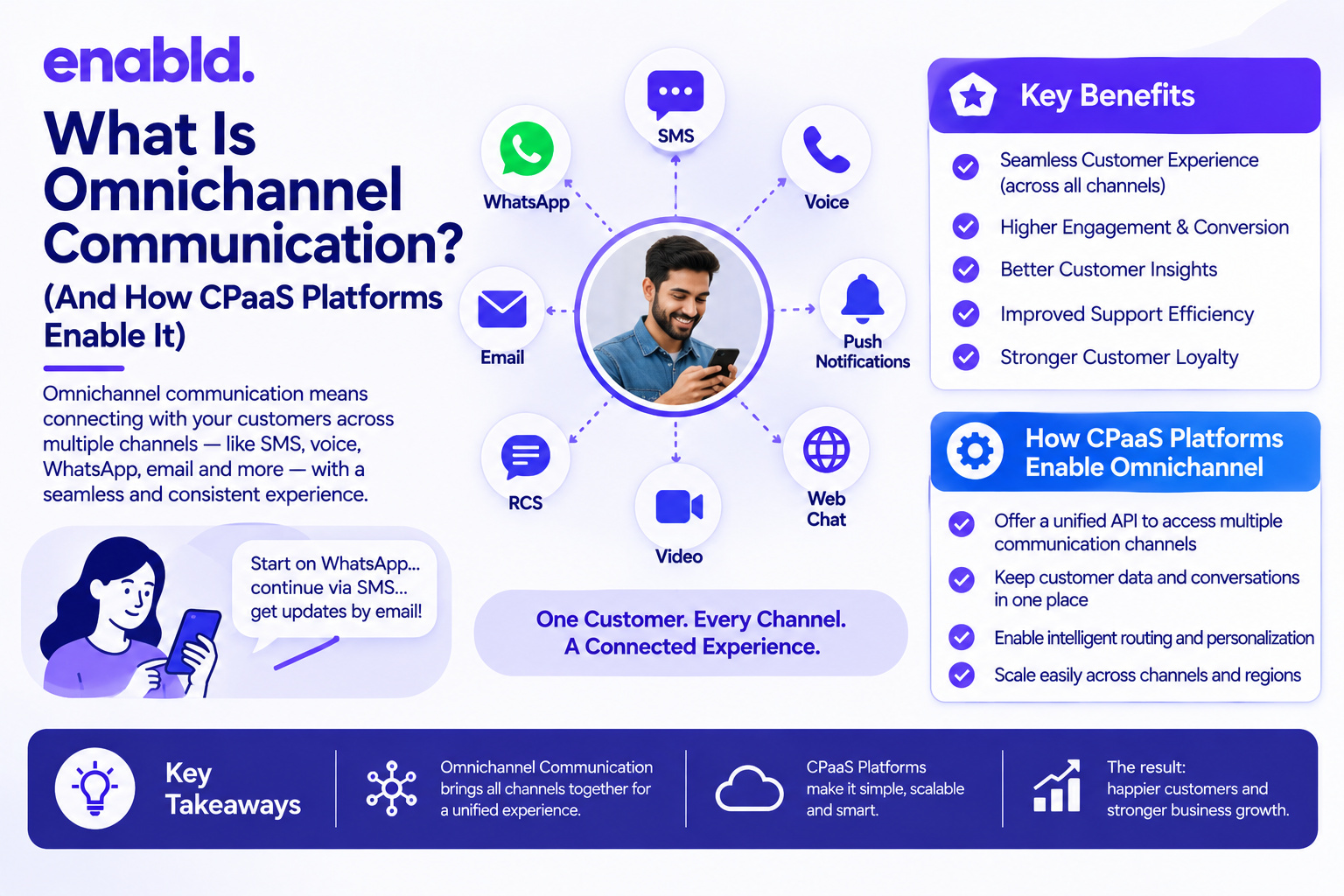
Quick Answer: Omnichannel communication is a way of connecting every channel a business uses, such as SMS, WhatsApp, RCS, voice, and email, into one coordinated experience. Customer context and conversation history follow the person from channel to channel. A CPaaS platform enables it by giving businesses one API layer that sends, receives, and routes messages across all of those channels.
What Is Omnichannel Communication?
Omnichannel communication treats a customer’s conversation as a single thread, no matter where it happens. The customer can start on one channel and continue on another without starting over, and the business sees the full history in one place.
The Core Idea
The focus is on the customer, not the channel. Each channel is a doorway into the same conversation, and the business decides which doorway fits each message best.
Why It Matters Now
Customers use different channels for different moments. A one time password belongs in SMS, a rich product update fits WhatsApp or RCS, and a complex issue may need a voice call. Businesses that coordinate these channels reach more people and spend less effort on repeat questions.
Omnichannel vs Multichannel Communication
The two terms get mixed up often, but they describe different setups.
| Factor | Multichannel | Omnichannel |
|---|---|---|
| Channels offered | Several | Several |
| Channel integration | Separate systems per channel | Connected through one platform |
| Customer history | Stored per channel | Shared across channels |
| Customer experience | Starts over when switching channels | Continues across channels |
| Routing logic | Manual or per campaign | Automatic, with fallback between channels |
| Reporting | Fragmented | Unified |
A multichannel business simply offers many channels. An omnichannel business connects them.
Which Channels Are Part of Omnichannel Communication?
SMS
SMS reaches every mobile phone without an app or data connection, which makes it the dependable base layer for alerts, OTPs, and fallback delivery.
WhatsApp and RCS
Both support rich media, buttons, and two way conversation. Our comparison of WhatsApp vs RCS vs SMS explains where each one performs best and how their reach differs by market.
Voice
Voice handles urgent or complex interactions, from automated notifications to live support calls.
Email and In App Messaging
These complete the picture for longer content, receipts, and logged in experiences.
How Omnichannel Communication Works
Behind the scenes, four elements make the experience feel connected.
A Unified API Layer
Applications send one request, and the platform decides how to deliver it. The business does not build separate integrations for every channel.
Intelligent Routing and Channel Fallback
If a message cannot be delivered on the preferred channel, the platform tries the next one automatically. A common pattern is a rich channel first, with SMS as the backup, so the message still arrives when the recipient is not reachable on the first choice.
Customer Identity and Context
The platform ties messages to a single customer profile, usually through the phone number, so history carries across channels.
Unified Reporting
Delivery, read, and response data come back through one view, which makes it easier to see what is working.
How CPaaS Platforms Enable Omnichannel Communication
A CPaaS platform packages communication channels as APIs, along with routing, security, and analytics. That makes it the natural foundation for omnichannel. If you want the background, our guide on what CPaaS is covers the basics.
One Integration, Many Channels
Instead of building and maintaining a separate integration for each channel, developers connect once and gain access to every channel the platform supports.
Carrier Grade Delivery Underneath
Rich channels still depend on reliable delivery, and SMS fallback depends on a solid gateway. A carrier grade SMS gateway platform handles routing and delivery reporting beneath the omnichannel layer. Our guide on how an SMS gateway works shows what happens at that level.
Built In Security and Fraud Controls
More channels mean more places for abuse. Platforms that include fraud protection, such as an SMS firewall, protect both customers and the brand.
Omnichannel Communication Use Cases
| Use Case | Primary Channel | Fallback or Follow Up |
|---|---|---|
| One time passwords | SMS | Voice call |
| Order and delivery updates | WhatsApp or RCS | SMS |
| Appointment reminders | SMS | Voice or WhatsApp reply to confirm |
| Customer support conversations | Voice or email | |
| Promotions and rich campaigns | RCS or WhatsApp | SMS |
Our guide on enterprise CPaaS use cases shows how businesses apply these patterns across banking, retail, healthcare, and SaaS.
Omnichannel Opportunities for Telcos
For telecom operators, omnichannel is also a product. Operators can package SMS, voice, and rich messaging into a branded platform and sell it to enterprise customers under their own name. Through CPaaS enablement, a telco can launch that offering without building the underlying stack. Our guide on launching omnichannel messaging under your own brand walks through how operators structure it.
What to Look for in an Omnichannel Communication Platform
- Support for SMS, WhatsApp, RCS, and voice under one API
- Automatic fallback rules between channels
- Shared customer context and unified reporting
- Carrier grade delivery and built in fraud protection
- White label options if you plan to resell the service
Our CPaaS vendor checklist covers these criteria in more depth, including questions to put in an RFP.
Final Thoughts
Omnichannel communication is less about having more channels and more about making them work together. Businesses get better reach and fewer dropped conversations, and customers get an experience that feels continuous. CPaaS gives both enterprises and telcos the practical way to build it. If you want to plan an omnichannel setup on your own platform, talk to the Enabld team about which channels and fallback rules fit your traffic.
Frequently Asked Questions
What is omnichannel communication?
Omnichannel communication connects all of a business’s channels, such as SMS, WhatsApp, RCS, voice, and email, into one coordinated experience where customer context follows the person from channel to channel.
What is the difference between omnichannel and multichannel?
Multichannel means offering several channels that often run in separate systems. Omnichannel connects those channels so history, routing, and reporting are shared and the customer can switch without starting over.
How does CPaaS enable omnichannel communication?
A CPaaS platform offers messaging and voice channels through one API layer, with routing, fallback, security, and analytics built in, so businesses do not need a separate integration for each channel.
What is channel fallback?
Channel fallback automatically sends a message through a backup channel if the first choice cannot deliver it. A typical setup tries a rich channel first, then falls back to SMS.
Why is SMS still part of an omnichannel strategy?
SMS reaches every mobile phone without an app or data connection, so it remains the most dependable fallback and the best fit for time sensitive messages like one time passwords.
Which channels should a business include?
It depends on the audience and use case. Most businesses start with SMS and add WhatsApp, RCS, or voice based on where their customers are most responsive in each market.
Can telecom operators offer omnichannel communication?
Yes. Operators can launch a branded omnichannel messaging platform through CPaaS enablement and sell it to enterprise customers, keeping the customer relationship and the recurring messaging revenue.
Is omnichannel communication only for large enterprises?
No. Businesses of any size can use a CPaaS platform to run omnichannel messaging, and usage based pricing keeps it accessible as volumes grow.